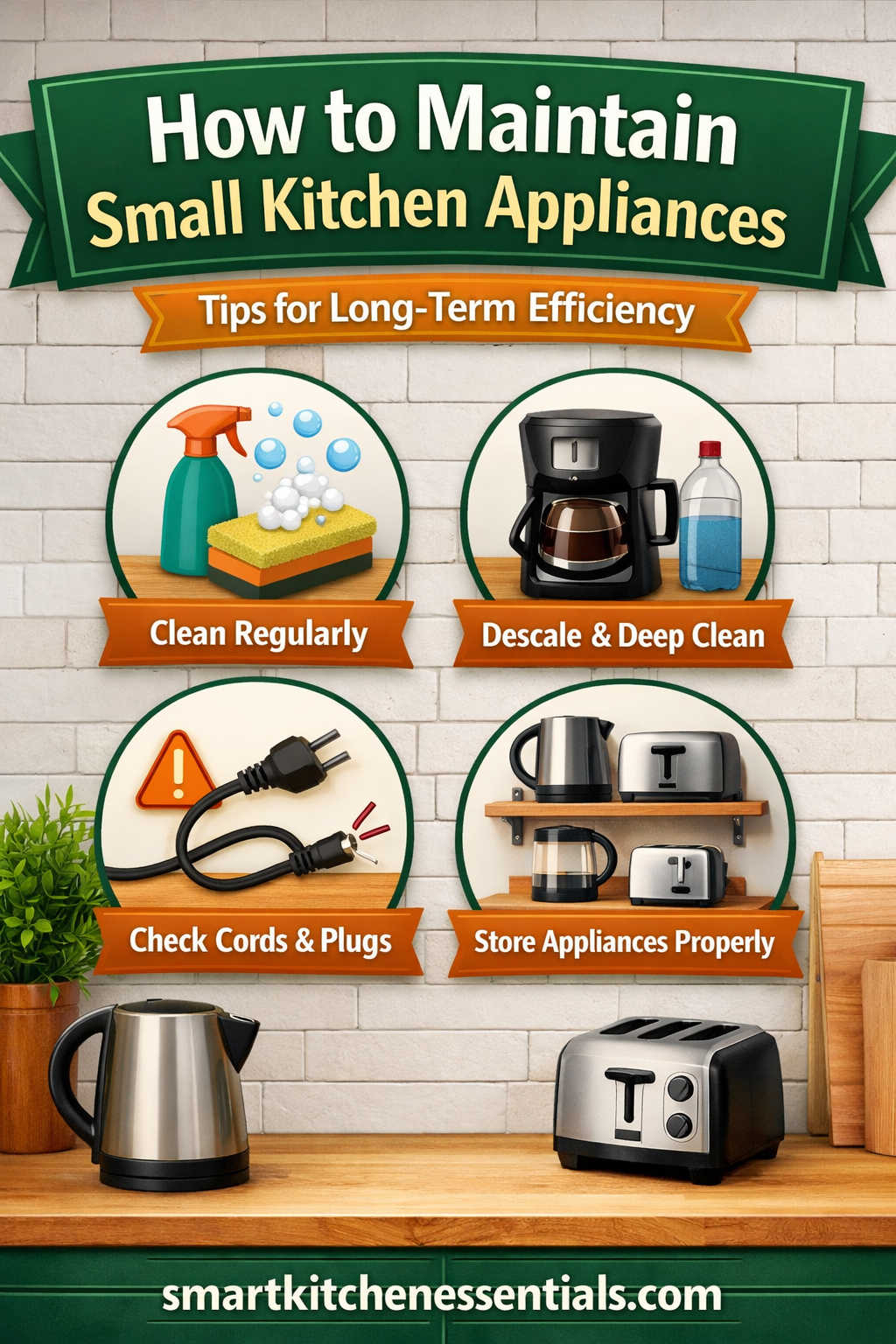
Small kitchen appliances have become essential in modern homes. Whether you are making a morning smoothie, brewing coffee, or quickly reheating leftovers, these devices simplify daily cooking tasks. However, many people overlook a critical factor: maintenance. Without proper care, even the best appliances lose efficiency, consume more energy, and eventually fail much sooner than expected.
Maintaining small kitchen appliances is not complicated. With a few practical habits—like regular cleaning, proper storage, and occasional deep maintenance—you can significantly extend the lifespan of these devices. In addition to improving performance, proper maintenance also saves money, enhances kitchen hygiene, and reduces unnecessary energy consumption.
This guide explains how to maintain small kitchen appliances for long-term efficiency. You will learn practical maintenance techniques, cleaning routines, troubleshooting tips, and expert advice that helps your appliances run smoothly for years.
Why Maintaining Small Kitchen Appliances Is Important
Many households focus on maintaining large appliances such as refrigerators or ovens, but smaller appliances deserve the same attention. These devices are often used daily and experience more frequent wear and tear.
Regular maintenance offers several important benefits.
Improves Performance
When appliances remain clean and well-maintained, they operate closer to their original performance level. Dust buildup, grease, and food residue can slow motors, reduce heating efficiency, or clog internal components.
Extends Appliance Lifespan
Appliances that receive routine maintenance last significantly longer. Simple tasks such as removing residue or replacing worn parts prevent internal damage that leads to costly repairs.
Saves Energy
A poorly maintained appliance often requires more electricity to perform the same task. Clean heating elements, blades, and filters help appliances run more efficiently.
Enhances Food Safety
Food particles left inside appliances can lead to bacteria growth and unpleasant odors. Regular cleaning ensures better hygiene and preserves the taste and quality of food.
Reduces Repair Costs
Preventive maintenance helps identify small issues early. Fixing minor problems before they worsen can save a considerable amount of money in repairs or replacements.
General Maintenance Tips for All Small Kitchen Appliances
Although every appliance has unique maintenance requirements, several universal practices apply to almost every device in your kitchen.
Always Read the Manufacturer’s Instructions
Each appliance is designed differently. The user manual provides specific guidelines for cleaning, maintenance schedules, and safe operation.
Ignoring these instructions can lead to accidental damage or void warranties.
Clean Appliances Immediately After Use
One of the simplest maintenance habits is cleaning appliances right after using them. When residue sits for too long, it becomes harder to remove and can damage internal components.
A quick cleaning routine usually includes:
- Wiping the exterior surface
- Washing removable parts
- Removing crumbs or leftover food
- Drying components before reassembly
Avoid Overloading
Overloading appliances puts unnecessary strain on motors and blades. Blenders, mixers, and food processors perform best when ingredients remain within recommended capacity limits.
Check Power Cords Regularly
Electrical safety is essential when using kitchen appliances. Inspect cords occasionally for damage such as:
- Frayed wiring
- Cracked insulation
- Loose plugs
If you notice any electrical issue, stop using the appliance until it is repaired or replaced.
Keep Appliances Dry
Most small appliances contain electrical motors. Water entering these components can cause permanent damage or electrical hazards.
Always unplug appliances before cleaning and avoid immersing motor bases in water.
Store Appliances Properly
Proper storage protects appliances from dust, humidity, and accidental damage. Store devices in clean cabinets or drawers when not in use.
How to Maintain a Blender for Long-Term Use
Blenders are among the most commonly used kitchen appliances. From smoothies and sauces to soups and protein shakes, they handle many tasks. Because of frequent use, they require consistent maintenance.
Quick Cleaning Method
After each use, follow this simple cleaning method:
- Fill the blender halfway with warm water.
- Add a drop of dishwashing liquid.
- Blend for about 20 seconds.
- Rinse thoroughly with clean water.
This method removes most food residue quickly without disassembling the entire unit.
Deep Cleaning Routine
At least once a week:
- Remove the blade assembly if possible
- Wash all removable parts with warm soapy water
- Clean the gasket or rubber seal
- Dry everything completely before reassembling
Tips to Protect the Blender Motor
- Avoid blending extremely hard ingredients unless the blender is designed for them
- Cut fruits and vegetables into smaller pieces
- Never operate the blender empty
- Allow the motor to rest between heavy blending cycles
Maintaining a Coffee Maker for Better Taste and Efficiency
Coffee makers are particularly vulnerable to mineral buildup caused by hard water. Over time, limescale accumulates inside the machine and affects brewing temperature and taste.
Daily Maintenance
After every use:
- Dispose of used coffee grounds or capsules
- Rinse the coffee pot or carafe
- Wipe down exterior surfaces
Descaling the Coffee Machine
Descaling should be done every one to three months depending on usage and water hardness.
Simple descaling method:
- Fill the water reservoir with equal parts vinegar and water.
- Run a full brewing cycle.
- Run two additional cycles with plain water.
- Rinse the carafe thoroughly.
This removes mineral deposits and restores optimal brewing performance.
Cleaning and Maintaining a Microwave
Microwaves quickly accumulate grease and food splatters. If left unattended, these residues can produce unpleasant odors and reduce heating efficiency.
Daily Cleaning Routine
After heavy use:
- Wipe the interior with a damp cloth
- Clean food spills immediately
- Wash the glass turntable regularly
Steam Cleaning Method
For stubborn stains:
- Place a microwave-safe bowl of water inside the microwave.
- Add lemon slices or a tablespoon of vinegar.
- Heat for several minutes until steam forms.
- Wipe the interior with a cloth.
The steam softens food residue and makes cleaning easier.
Check Ventilation Areas
Blocked vents can cause overheating and reduced performance. Occasionally inspect the microwave’s vents and remove dust or grease buildup.
Proper Care for Toasters and Toaster Ovens
Toasters accumulate crumbs during daily use. Over time, these crumbs can burn, causing smoke or unpleasant smells.
Cleaning a Toaster
Follow these steps safely:
- Unplug the toaster.
- Remove the crumb tray.
- Empty and wash the tray.
- Shake the toaster gently over a sink to remove loose crumbs.
Never insert metal objects into a plugged-in toaster.
Cleaning a Toaster Oven
Toaster ovens require slightly more maintenance.
Recommended routine:
- Wash removable trays and racks
- Wipe the interior with a damp cloth
- Remove grease buildup regularly
Avoid abrasive cleaning materials that can damage heating elements.
Maintaining Food Processors and Mixers
Food processors and mixers are powerful tools for chopping, kneading, and mixing. Regular maintenance ensures consistent performance and sharp blades.
Cleaning After Use
After each use:
- Disassemble the appliance
- Wash bowls, lids, and attachments
- Dry thoroughly before reassembling
Blade Care
Blades gradually lose sharpness over time.
To extend blade life:
- Avoid grinding extremely hard items
- Store blades safely
- Replace dull blades when necessary
Maintaining Electric Kettles
Electric kettles frequently develop limescale due to mineral deposits in water.
Descaling Routine
Every few weeks:
- Fill the kettle with a mixture of water and vinegar.
- Bring it to a boil.
- Let the mixture sit for 20 minutes.
- Rinse thoroughly.
Daily Care
- Empty leftover water after use
- Avoid overfilling
- Keep the exterior dry
These habits keep the heating element functioning efficiently.
Recommended Small Kitchen Appliances Known for Durability
Choosing reliable appliances can make maintenance easier and improve long-term performance.
Some well-reviewed options include:
Durable Blender Options
These blenders are known for strong motors and long lifespans.
Reliable Coffee Makers
Both models are popular for consistent brewing quality.
Long-Lasting Food Processors
They offer durable construction and efficient motors.
Investing in high-quality appliances often reduces maintenance problems over time.
Common Problems and How to Prevent Them
Even well-designed appliances can experience occasional issues.
Overheating
Motors may overheat if appliances operate continuously for long periods.
Prevent overheating by:
- Allowing cooling breaks between uses
- Avoiding excessive loads
- Keeping vents clean
Strange Noises
Unusual sounds may indicate loose parts or motor strain.
If this happens:
- Turn off the appliance immediately
- Check for trapped objects
- Inspect attachments and blades
Reduced Performance
If appliances seem slower or less effective:
- Clean internal components
- Remove grease buildup
- Check blades or filters
Regular maintenance usually resolves these problems quickly.
Energy Efficiency Tips for Small Kitchen Appliances
Efficient appliances reduce electricity consumption and help lower energy bills.
Choose the Right Appliance for the Task
Using a toaster oven instead of a large oven for small meals saves significant energy.
Keep Appliances Clean
Clean appliances require less effort to perform tasks, reducing energy use.
Unplug Devices When Not in Use
Many appliances consume standby power even when turned off. Unplugging them prevents unnecessary energy waste.
Creating a Simple Appliance Maintenance Schedule
A maintenance routine ensures appliances stay in good condition.
Daily Tasks
- Wipe appliance surfaces
- Wash removable components
- Remove crumbs and food residue
Weekly Tasks
- Deep clean frequently used appliances
- Inspect blades and attachments
- Clean vents and filters
Monthly Tasks
- Descale coffee makers and kettles
- Check power cords
- Remove hidden grease buildup
Consistency is the key to maintaining long-term efficiency.
Storage Tips to Protect Small Appliances
Improper storage can shorten the lifespan of appliances.
Store Appliances in Dry Areas
Humidity can damage electrical components and cause rust.
Prevent Dust Accumulation
Use appliance covers or store devices in cabinets to protect them from dust.
Manage Power Cords Carefully
Avoid wrapping cords tightly around appliances, as this may damage internal wiring.
When to Repair or Replace a Small Appliance
Even well-maintained appliances eventually reach the end of their lifespan.
Signs an Appliance Needs Repair
- Burning smell during operation
- Repeated overheating
- Electrical sparks or flickering power
- Sudden loss of power or speed
Signs Replacement May Be Better
Sometimes replacement is the smarter choice.
Consider replacing the appliance if:
- Repair costs are too high
- The appliance is outdated
- Energy efficiency is significantly lower than modern models
Frequently Asked Questions
How often should small kitchen appliances be cleaned?
Most appliances should be cleaned after each use to prevent residue buildup. Deep cleaning can be done weekly or monthly depending on usage.
What is the best way to remove limescale from appliances?
A mixture of vinegar and water is one of the most effective and affordable methods for removing mineral deposits from coffee makers, kettles, and similar appliances.
Can regular maintenance really extend appliance lifespan?
Yes. Routine cleaning, proper usage, and occasional inspections can extend appliance lifespan by several years.
Is it safe to wash appliance parts in the dishwasher?
Many removable components are dishwasher-safe, but always check the manufacturer’s instructions before doing so.
Why do appliances lose efficiency over time?
Common reasons include mineral buildup, grease accumulation, worn blades, clogged vents, and motor strain from overloading.
Final Thoughts
Small kitchen appliances play a vital role in everyday cooking and meal preparation. Yet their performance and longevity depend largely on how well they are maintained.
Simple habits—such as cleaning appliances immediately after use, descaling machines regularly, inspecting cords, and storing devices properly—can dramatically improve efficiency and lifespan. Preventive maintenance also reduces repair costs and keeps appliances operating safely.
By following the practical tips in this guide, you can keep your kitchen appliances running smoothly for years. A little attention and care today can save significant time, money, and frustration in the future while ensuring your kitchen remains efficient and enjoyable to use.