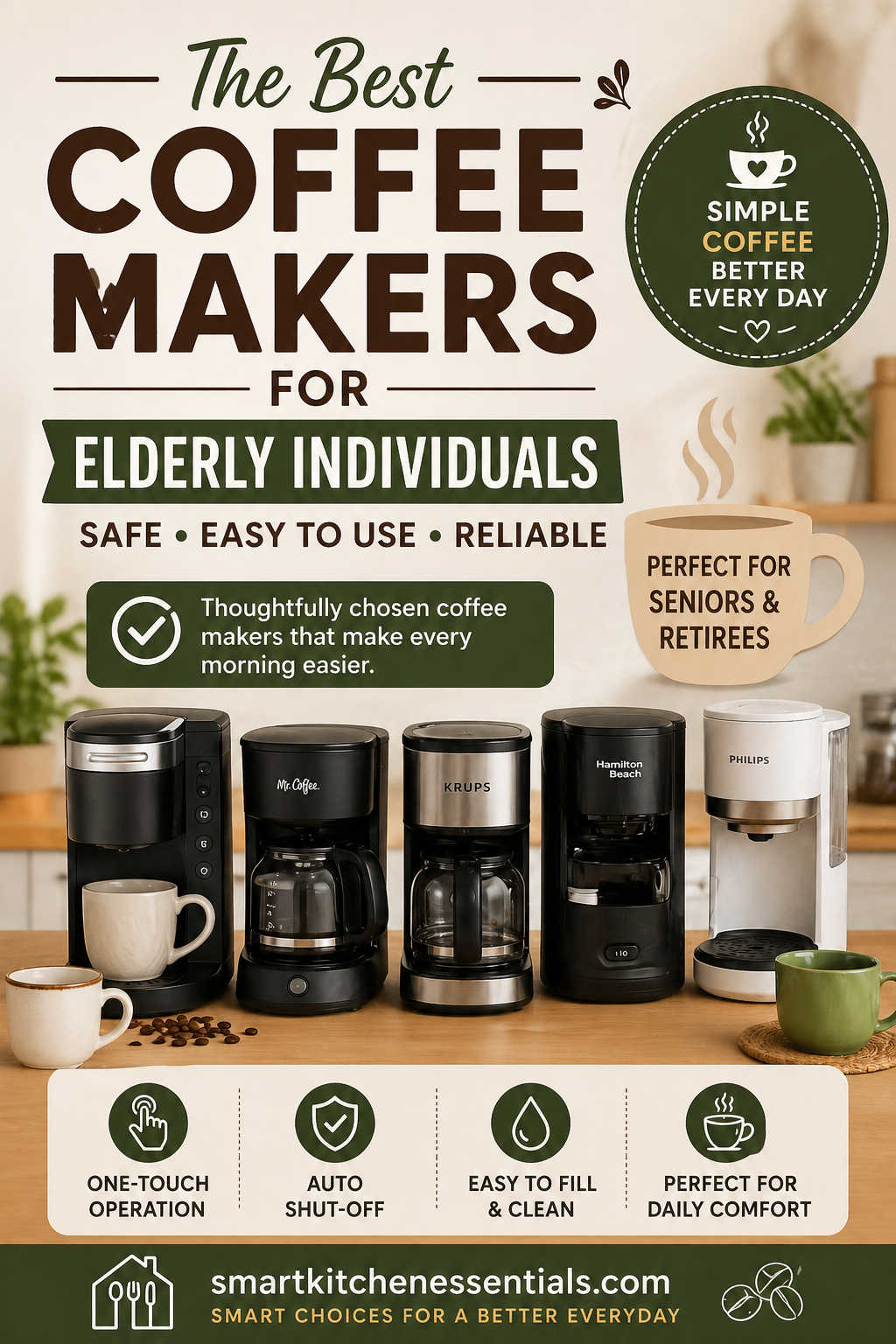
Creating a comfortable and independent daily routine becomes increasingly important with age, and for many people, coffee plays a central role in that routine. The aroma of freshly brewed coffee in the morning can be both energizing and comforting. However, not all coffee makers are designed with elderly users in mind. Complicated controls, heavy components, and safety concerns can turn a simple activity into a frustrating or even risky experience.
This guide is designed to help you find the best coffee makers for elderly individuals by focusing on ease of use, safety, and practicality. Whether you’re choosing for yourself, a parent, or a loved one, the goal is to ensure that making coffee remains an enjoyable and stress-free experience.
Why Coffee Makers Need to Be Senior-Friendly
As people grow older, physical and cognitive changes can affect how they interact with everyday appliances. Reduced hand strength, arthritis, declining vision, and memory challenges can make standard coffee machines difficult to operate.
A senior-friendly coffee maker addresses these challenges by offering:
- Simple and intuitive controls
- Minimal physical effort
- Clear visual indicators
- Built-in safety features
The right machine can help maintain independence while reducing reliance on others for daily tasks.
Key Features to Look for in the Best Coffee Makers for Elderly Users
Choosing the right coffee maker involves more than just picking a popular brand. It’s about matching the machine’s features to the user’s needs.
Easy-to-Use Controls
Look for machines with clearly labeled buttons and minimal settings. One-touch operation is ideal. Complicated digital panels or multi-step processes should be avoided unless the user is comfortable with technology.
Large buttons with good contrast are especially helpful for those with vision issues.
Automatic Shut-Off for Safety
Safety is one of the most important considerations. Coffee makers with automatic shut-off features turn themselves off after brewing, reducing the risk of overheating or fire hazards.
This is particularly useful for individuals who may forget to switch off appliances.
Lightweight and Ergonomic Design
Heavy glass carafes can be difficult to lift and pour, especially for individuals with arthritis or reduced strength. Look for:
- Lightweight materials
- Comfortable handles
- Balanced design for easy pouring
Single-serve machines eliminate the need for lifting altogether, which can be a major advantage.
Clear Water Reservoir and Indicators
Filling the coffee maker should be simple and precise. A visible water level indicator helps prevent overfilling or underfilling.
Front-facing reservoirs are easier to access and reduce the need to move the machine.
Minimal Maintenance Requirements
Cleaning should not be a complicated task. Machines with removable parts and dishwasher-safe components make maintenance easier.
Low-maintenance designs encourage regular use and ensure better hygiene.
Audible and Visual Alerts
Indicators such as beeping sounds or lights can signal when the coffee is ready. This is helpful for users who may not be watching the machine closely.
Compact Size
A smaller coffee maker is easier to manage and takes up less space. Compact machines are ideal for individuals living alone or in smaller homes.
Types of Coffee Makers Suitable for Elderly Individuals
Understanding the different types of coffee makers can help narrow down the best option.
Single-Serve Coffee Makers
Single-serve machines are among the easiest to use. They require minimal effort and eliminate guesswork.
How they work:
- Insert a coffee pod
- Press a button
- Wait for the coffee to brew
Benefits include:
- No measuring required
- Minimal cleanup
- Consistent taste
These machines are ideal for individuals who prioritize convenience and simplicity.
Drip Coffee Makers
Drip coffee makers are traditional and familiar to many people. They are a good option for those who prefer brewing multiple cups at once.
Advantages:
- Easy to understand
- Widely available
- Cost-effective
However, it’s best to choose models with simplified controls rather than advanced programmable features.
Bean-to-Cup Coffee Machines
These machines grind coffee beans and brew coffee automatically. While they offer excellent flavor, they can be more complex.
Modern versions with simplified interfaces can still be suitable for seniors who enjoy high-quality coffee without manual effort.
Programmable Coffee Makers
Programmable machines allow users to set brewing times in advance. This can be convenient for having coffee ready in the morning.
However, they may not be ideal for everyone, especially if the programming process is complicated.
Best Coffee Makers for Elderly Individuals
Here are some of the best options available, selected for their ease of use, safety features, and reliability.
Keurig K-Express Coffee Maker
This single-serve machine is one of the most user-friendly options on the market. It features simple button controls and a removable water reservoir.
Key benefits:
- One-touch brewing
- Multiple cup sizes
- Quick preparation time
- Automatic shut-off
It’s a great choice for seniors who want a hassle-free experience.
Hamilton Beach Scoop Coffee Maker
This model allows users to brew coffee directly from ground coffee without using pods.
Key benefits:
- Built-in scoop for easy measurement
- No paper filters required
- Straightforward operation
It’s ideal for those who prefer traditional coffee but want a simpler process.
KRUPS Simply Brew 5-Cup Coffee Maker
A compact and practical option for individuals who don’t need large quantities of coffee.
Key benefits:
- Small size
- Easy-to-clean components
- Simple on/off operation
This machine is perfect for single users or small households.
Mr. Coffee 12-Cup Coffee Maker
A classic choice that many people are already familiar with.
Key benefits:
- Traditional design
- Large capacity
- Basic controls
Its familiarity makes it easier for seniors who prefer not to learn a new system.
Philips Baristina Coffee Machine
This machine combines modern technology with simplicity.
Key benefits:
- Automatic grinding and brewing
- Minimal user input required
- Fast operation
It’s suitable for seniors who want a more premium coffee experience without complexity.
How to Choose the Right Coffee Maker
Selecting the best coffee maker depends on individual needs and preferences.
For Seniors Living Alone
Single-serve or small drip coffee makers are ideal. They reduce waste and are easier to manage.
For Seniors with Limited Mobility
Look for machines with:
- Front-facing water reservoirs
- Lightweight components
- Minimal lifting requirements
For Seniors with Memory Challenges
Choose machines with:
- One-button operation
- Automatic shut-off
- Clear indicators
For Coffee Enthusiasts
If the user values taste and variety, a simplified bean-to-cup machine may be the best choice.
Safety Tips When Using Coffee Makers
Even with a user-friendly machine, safety should always be considered.
- Place the coffee maker on a stable surface
- Keep cords out of the way to prevent tripping
- Avoid overfilling the water reservoir
- Use insulated mugs to reduce burn risk
- Regularly check the machine for wear and tear
Maintenance Tips for Long-Term Use
Proper maintenance ensures that the coffee maker continues to function effectively.
Daily Cleaning
- Rinse removable parts
- Wipe down the exterior
Weekly Cleaning
- Wash all detachable components thoroughly
Monthly Descaling
- Use a descaling solution or vinegar to remove mineral buildup
General Care
- Use clean, filtered water
- Replace worn parts when necessary
Common Mistakes to Avoid
When choosing a coffee maker for elderly individuals, avoid the following:
- Buying overly complex machines
- Choosing models with small or unclear displays
- Ignoring safety features
- Selecting heavy or bulky designs
- Overlooking ease of cleaning
Benefits of the Right Coffee Maker
A well-chosen coffee maker offers more than convenience. It can:
- Promote independence
- Reduce daily stress
- Improve safety in the kitchen
- Enhance overall quality of life
For many seniors, being able to make coffee independently is a small but meaningful part of maintaining autonomy.
Frequently Asked Questions (FAQs)
What is the easiest coffee maker for elderly individuals?
Single-serve coffee makers are generally the easiest to use. They require minimal steps and eliminate the need for measuring or handling heavy components.
Are programmable coffee makers suitable for seniors?
They can be, but only if the controls are simple. For individuals who are not comfortable with technology, basic machines are often a better choice.
Is a glass carafe or thermal carafe better?
Thermal carafes are safer because they don’t require a hot plate to keep coffee warm. They also reduce the risk of burns.
How important is automatic shut-off?
It is extremely important for safety. It prevents overheating and reduces the risk of accidents.
Can elderly individuals use espresso machines?
Yes, but only if the machine is simple and automated. Manual espresso machines may be too complicated.
How often should a coffee maker be cleaned?
Daily rinsing and monthly descaling are recommended to maintain performance and hygiene.
Final Thoughts
Finding the best coffee maker for elderly individuals involves balancing simplicity, safety, and functionality. The ideal machine should make the process of brewing coffee as easy and enjoyable as possible.
By focusing on user-friendly features such as one-touch operation, automatic shut-off, and easy maintenance, you can ensure that the coffee-making experience remains safe and satisfying.
Whether it’s a single-serve machine for convenience or a traditional drip coffee maker for familiarity, the right choice can make a meaningful difference in daily life.