Most people don’t think of their kitchen as an environmental issue. It’s just where breakfast happens, where dinner gets made, where the family gathers. But spend a moment considering what’s actually running in there — the refrigerator going 24 hours a day, the oven heating up to 400°F multiple times a week, the dishwasher grinding through cycle after cycle — and it becomes clear that the kitchen quietly consumes more household energy than almost any other room.
That’s not a reason to feel guilty. It’s a reason to get practical.
This guide is for people who want real change — not vague advice about “being mindful,” but specific, tested habits and thoughtful product choices that genuinely shrink your energy footprint. Whether you’re renting a flat or renovating a whole kitchen, there’s something here you can act on today.
Why Your Kitchen Deserves More Attention Than You’re Giving It
Here’s something that often surprises homeowners: kitchen appliances, collectively, account for a large chunk of total household electricity consumption. The refrigerator alone runs every single minute of the year. Add in the oven, stovetop, dishwasher, microwave, kettle, and the half-dozen small appliances plugged into your countertops, and you’ve got a room that quietly drives up your electricity bill month after month.
Food waste compounds the problem. When produce rots in the back of a vegetable drawer or leftovers get tossed without a second thought, it’s not just money down the drain — it’s all the water, fuel, and farming labor embedded in that food going to waste too.
The encouraging reality is that most of the meaningful changes are free. They’re habits. The ones that do cost money tend to pay for themselves through lower bills. And a few smart product choices make the whole process far easier.
Getting the Most from Your Refrigerator
The refrigerator is your kitchen’s biggest ongoing energy expense, and it’s also one of the easiest to optimize without spending a penny.
Temperature setting matters more than people realize. Running your fridge colder than necessary — which many households do out of habit — just makes the motor work harder for no benefit. Aim for somewhere between 35 and 38 degrees Fahrenheit for the main compartment, and keep the freezer right at zero degrees. Those settings keep food safe while putting minimal strain on the compressor.
One of the sneakiest sources of wasted energy is the door seal. Over time, the rubber gasket that lines your refrigerator door stretches and loses its grip. Cold air bleeds out constantly, and the motor compensates by running more often. You can check your seal with a piece of paper: close the door on it and try to pull it out. If it slides free without resistance, that seal needs replacing — a fairly inexpensive fix that pays off immediately.
The condenser coils behind or beneath your fridge deserve attention once a year. When they collect dust, they can’t release heat efficiently, so the whole system runs hotter and harder than it should. A quick pass with a vacuum brush solves it.
Something else worth building into your kitchen routine: let hot food cool before it goes in the fridge. Not indefinitely — food safety guidelines suggest not leaving cooked food at room temperature for more than two hours — but even fifteen or twenty minutes of cooling time saves your refrigerator from taking on a sudden burst of heat it then has to eliminate.
Smarter Stovetop Cooking
The stovetop is where most of us cook most of our meals, and it’s also where surprisingly simple adjustments deliver consistent energy savings over time.
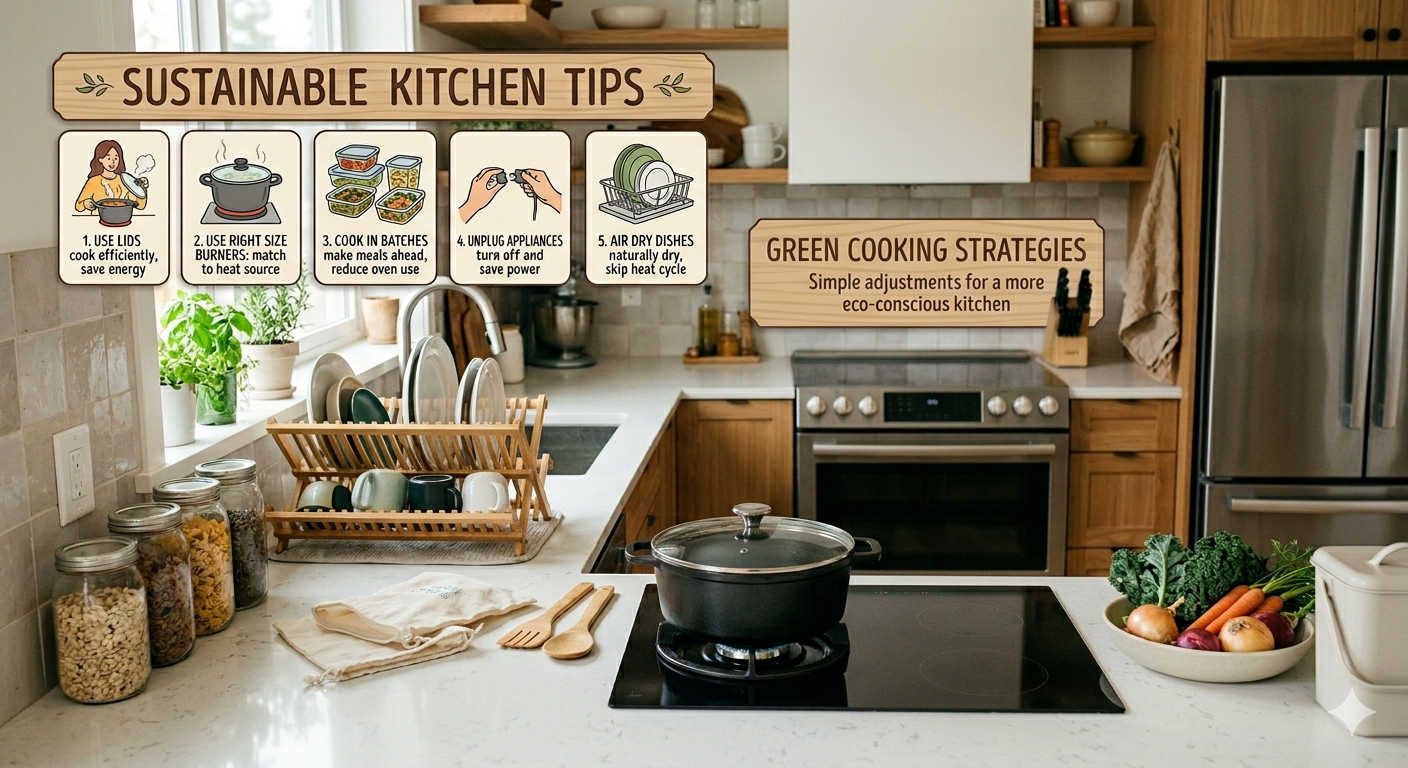
Start with pan sizing. Using a small saucepan on a large burner means most of the heat radiates outward into the air rather than into your food. It’s a quiet waste that’s easy to miss but adds up across hundreds of meals. Keep the pan and the burner proportional to each other.
Lids are underrated. Covering a pot while water heats or soup simmers keeps heat circulating inside the cookware rather than escaping into your kitchen. Food cooks faster, which means the burner runs for less time. It’s one of those habits that sounds obvious but genuinely changes the math on your energy use.
If you’re in the market for a new cooktop, induction is worth serious consideration. Induction technology heats cookware directly through electromagnetic energy, rather than heating a coil or gas flame that then heats the pan. The result is that far less energy is lost in the transfer process. It also makes the kitchen cooler in summer, which reduces any load on air conditioning.
For electric stovetops in particular, there’s a useful trick in switching off the burner a few minutes before the food is done. The element retains heat and keeps cooking without drawing any more power. It takes a bit of practice to time, but it becomes second nature.
Pressure cookers deserve a dedicated mention here. They’re often seen as a specialized tool for certain cuisines, but they’re genuinely one of the most energy-efficient ways to cook any dense ingredient — beans, grains, root vegetables, whole cuts of meat. The pressurized environment raises the boiling point of water, cutting cooking times dramatically. Slow cookers work at the other end of the spectrum: low wattage, long time, minimal supervision — ideal for making use of cheaper cuts or batch-cooking legumes while you’re at work.
Using Your Oven More Intelligently
Ovens take a lot of energy to reach temperature, and they’re less efficient than stovetop cooking for smaller portions. But used strategically, they’re still a practical tool — especially if you batch cook.
Preheating deserves some scrutiny. It’s become reflexive for many cooks, but most roasted dishes, baked vegetables, and casseroles don’t actually require a fully preheated oven to turn out well. The recipes where initial temperature genuinely matters are delicate baked goods — certain cakes, soufflés, laminated pastries. For most savory cooking, you can start from cold and adjust the timing slightly.
Opening the oven door mid-cook is a habit worth breaking. Each time you do it, a significant amount of heat rushes out, and the oven has to cycle back up to temperature. The window and interior light are there for a reason — use them.
If your oven has a convection setting, treat it as your default rather than your exception. The fan circulates heat more evenly throughout the cavity, allowing lower temperatures and shorter cooking times to achieve equivalent results.
One of the most effective oven habits is cooking multiple things at once. If the oven is already on and hot, sliding in a tray of roasted vegetables alongside a main dish costs almost nothing in additional energy. Thinking one meal ahead — or planning two or three meals around a single oven session — is one of the most practical ways to reduce overall kitchen energy use.
Rethinking How You Boil and Heat Water
Water heating is one of the more energy-intensive aspects of kitchen work, whether you’re boiling for pasta, steeping tea, or running hot water for cleaning up.
An electric kettle is more efficient than heating water in a saucepan on the stovetop — the heating element is in direct contact with the water, with minimal energy lost to surrounding air. The bigger habit to develop alongside it is boiling only what you need. Filling a full kettle to make a single cup of tea, multiple times a day, wastes a notable amount of electricity over weeks and months.
For households where the kitchen sits far from the hot water heater, insulating the pipes in between is a worthwhile investment. It reduces heat lost as water travels through them, meaning you get usable hot water faster and waste less water waiting for it to arrive.
Tackling Food Waste at the Source
Food waste is the sustainability issue that doesn’t get discussed in energy terms often enough. When food is discarded — and in many households, a remarkable amount is — all the energy that went into producing, refrigerating, and transporting it is wasted along with it.
Meal planning is the single most effective antidote. When you know what you’re cooking across the week, shopping becomes targeted rather than speculative. You buy what you’ll use, use what you buy, and the cycle of forgotten produce dying in the back of a drawer breaks.
Proper food storage extends the life of what you buy significantly. Fresh herbs last far longer stored upright in a glass of water in the fridge, stems submerged, like cut flowers. Avocados ripen best at room temperature and only go into the fridge once they’re soft. Dry goods — grains, legumes, nuts — stay fresh far longer in airtight containers than in loosely sealed bags.
Learning to cook from scraps is a satisfying habit once it takes hold. Parmesan rinds, vegetable peels, herb stems, bones from a roast chicken — all of these become the base for stocks and broths. Stale bread makes croutons, breadcrumbs, or the foundation of a good panzanella. Day-old rice becomes fried rice with a splash of soy sauce and whatever’s in the vegetable drawer. This kind of cooking reduces waste and often produces some of the most satisfying meals.
For the scraps that genuinely can’t be used — citrus peel, eggshells, coffee grounds — composting keeps organic matter out of landfills, where it breaks down without oxygen and releases methane. It turns what would be waste into something that actively improves your garden soil.
Choosing the Right Kitchen Appliances
When an appliance reaches the end of its life, replacement is an opportunity. Efficiency ratings vary enormously between models, and the long-term savings from a well-chosen appliance often make a higher upfront cost worthwhile.
Recommended Products Worth Considering
Instant Pot Duo 7-in-1 Electric Pressure Cooker
A pressure cooker, slow cooker, rice cooker, and steamer rolled into one countertop appliance. Pressure cooking cuts the time required for beans, soups, grains, and braised meats by a substantial margin compared to conventional methods, which translates directly into lower energy consumption per meal. The 6-quart version suits most households well for batch cooking.
Breville Smart Kettle Luxe
A variable-temperature electric kettle with a minimum-fill indicator and a “Keep Warm” function. For households that heat water repeatedly throughout the day — for tea, French press coffee, instant oats — this kind of precision design discourages the habit of filling the kettle full when you only need two cups’ worth.
Philips Airfryer XXL (or comparable model)
A countertop convection appliance that handles most roasting and baking tasks using considerably less electricity than a full-sized oven. It preheats in under three minutes and runs at lower wattage throughout. For households of one to four people, it covers the majority of weeknight cooking needs without touching the main oven at all.
COSORI Electric Food Dehydrator
For households serious about reducing food waste, a dehydrator extends the life of fruit, vegetables, and herbs that are close to going off. It runs at low wattage over several hours with no supervision required, and the results — dried fruit, herb powders, vegetable chips — store at room temperature for months.
Smart Power Strip (e.g., Kasa Smart KP303)
Standby power — drawn by appliances in off-but-plugged-in mode — is a real and often invisible cost across a kitchen full of small electronics. A smart power strip allows you to cut power to multiple appliances at once, either manually or on a set schedule, without crawling behind cabinets to unplug things individually.
Energy Star-Certified Refrigerators (e.g., LG LRFXS2503S or Samsung Bespoke series)
Energy Star certification represents a meaningful step up in efficiency from uncertified alternatives. When replacing an aging refrigerator — particularly one more than ten years old — certified models offer substantial ongoing savings. Many utility companies also provide rebates for Energy Star purchases, which can make the economics of upgrading considerably more attractive.
Water Conservation in the Kitchen
Water and energy are deeply linked in kitchen operations. Heating water costs energy. Pumping it costs energy. And in water-stressed regions, the financial cost of water itself is rising.
The dishwasher is actually more water-efficient than hand washing for full loads — provided it’s used correctly. An eco or energy-saving cycle uses lower temperatures and a longer wash time, which reduces both water and electricity compared to a standard cycle. Skipping the heated drying function and letting dishes air dry saves that portion of electricity use entirely, with no downside except slightly longer drying time.
For produce washing, shifting from running water to a basin is a straightforward change. Fill it, wash everything at once, then use that water to feed houseplants rather than pouring it down the drain.
A dripping tap is worth fixing promptly. The volume of water lost through even a slow drip over weeks is larger than most people expect, and the energy cost of heating that lost water makes the problem worse.
Lighting and Ventilation
LED bulbs in kitchen fixtures are non-negotiable at this point. The efficiency difference between LED and older incandescent or halogen technology is enormous, and the lifespan gap means far fewer replacements over time. If any kitchen fixtures still run on older bulbs, swapping them out is one of the highest-return, lowest-effort improvements available.
Natural light is worth organizing around. Prepping and cooking during daylight hours, positioning your main work surface near windows, keeping window treatments open — these habits reduce reliance on artificial lighting through much of the day.
Range hood usage is worth being deliberate about. Running the extraction fan at full power for an hour when twenty minutes would have done the job is a small but avoidable waste. Turn it on when you need it, off when you don’t.
The Bigger Picture: Cooking Habits That Multiply Your Impact
Beyond individual appliances and techniques, a few broader cooking habits have outsized effects on your kitchen’s environmental footprint.
Cooking from whole ingredients — rather than relying heavily on processed or heavily packaged food — reduces packaging waste and the embedded energy that goes into manufacturing those products. Whole grains, fresh produce, dried legumes, and basic proteins require less industrial processing than their convenience-food equivalents, and they tend to generate less packaging per meal.
Incorporating more plant-based meals into your weekly routine has a measurable effect on your food-related carbon footprint. Meat production — particularly beef and lamb — is significantly more resource-intensive than producing equivalent protein from legumes, grains, or tofu. You don’t need to overhaul your diet overnight to see the benefit. Shifting even a few meals per week makes a real difference when multiplied across a household and a year.
Buying from local producers and farmers markets when practical reduces transportation distances and often means fresher, less heavily packaged produce. It also supports smaller-scale agricultural practices that tend to be more ecologically sound than large industrial operations.
Sustainable Kitchen Checklist
Work through this at your own pace — there’s no deadline:
- [ ] Set fridge to 35–38°F and freezer to 0°F
- [ ] Test door gaskets; replace if worn
- [ ] Clean refrigerator condenser coils once a year
- [ ] Allow hot food to cool before refrigerating
- [ ] Match pan size to burner size on the stovetop
- [ ] Cook with lids on pots and pans
- [ ] Use convection oven mode as your default
- [ ] Skip preheating for savory roasted dishes
- [ ] Batch cook multiple dishes in one oven session
- [ ] Boil only the water you need in the kettle
- [ ] Plan weekly meals before grocery shopping
- [ ] Store produce using methods that extend its freshness
- [ ] Cook from scraps and repurpose leftovers actively
- [ ] Compost unavoidable food waste
- [ ] Run the dishwasher only when full, on eco mode, air dry
- [ ] Use a basin for washing produce
- [ ] Unplug small appliances or use a smart power strip
- [ ] Replace all remaining incandescent bulbs with LEDs
- [ ] Introduce one or two plant-based meal swaps per week
Frequently Asked Questions
What uses the most energy in a typical kitchen?
The refrigerator, without question. Every other kitchen appliance operates in bursts — you turn it on, use it, turn it off. The refrigerator runs continuously, every hour of every day, whether you’re cooking or asleep or away on holiday. Over the course of a year, that constant operation adds up to the largest single share of kitchen electricity consumption. The good news is that the biggest gains from refrigerator optimization — correct temperature setting, clean coils, an intact door seal — cost nothing to implement.
Are induction cooktops genuinely more efficient than gas?
Yes, by a significant margin. Gas cooking loses a large portion of its heat energy into the surrounding air, because the flame heats the exterior of the pan rather than generating heat within it. Induction uses electromagnetic interaction to generate heat directly in the pan’s base, so the transfer is far more efficient. There’s an additional benefit: the cooktop surface itself doesn’t get hot, only the pan, which makes the kitchen more comfortable during warm months and reduces the workload on any air conditioning.
How much does standby power actually cost over a year?
Research consistently shows that standby power — the electricity drawn by appliances that are off but still plugged in — can account for a meaningful percentage of total household electricity use annually. In kitchens specifically, the common offenders are microwaves with digital displays, coffee makers, toasters, and anything with an indicator light. The fix is simple: smart power strips or the habit of unplugging infrequently used appliances when they’re not in active use.
Is hand washing dishes or using a dishwasher better for the environment?
For full loads, a modern dishwasher uses less water than hand washing under a running tap. The key details: it needs to be a genuinely full load, run on an eco cycle, and finished with air drying rather than heated drying. Half-loads on a standard cycle, or hand washing in a basin rather than under running water, can change the calculation. The dishwasher wins when it’s used correctly and loaded fully.
Does meal planning actually reduce food waste by much?
It does, consistently. The majority of household food waste comes from produce and leftovers that were bought or cooked without a specific use planned for them. When you plan before you shop, everything you buy has somewhere to go. It doesn’t require elaborate systems — even a loose plan for four or five dinners per week is enough to break the cycle of forgotten ingredients going off before you get to them.
When is replacing an older appliance with an Energy Star model worth it financially?
When an appliance is more than ten years old, it’s usually worth comparing its estimated running costs against a current Energy Star-certified equivalent. Refrigerators age particularly poorly in efficiency terms. Many utility companies and local governments offer rebates for Energy Star purchases, which can close the gap on upfront cost. Over a ten-year lifespan, the savings on electricity bills from a more efficient model often exceed the price difference at purchase.
Can an air fryer genuinely replace a full-sized oven for everyday cooking?
For most weeknight cooking — roasting vegetables, cooking fish or chicken, reheating food to a proper temperature — yes. A countertop air fryer is a convection oven in compact form, and for portions sized for one to four people, it preheats in a fraction of the time and runs at lower wattage. For batch cooking large quantities, baking delicate pastries, or cooking for a larger household, a full oven is still the better tool. Used in combination, they complement each other well.
What’s the single easiest sustainable kitchen habit to start with?
Boiling only as much water as you need in the kettle. No new equipment required, no change to your routine beyond a moment of awareness before you fill it. For a household that makes several hot drinks throughout the day, this habit reduces electricity use in a concrete, measurable way. More importantly, it’s the kind of small, frictionless change that builds the mindset for larger ones.
Closing Thoughts
A sustainable kitchen doesn’t arrive fully formed after a single weekend of changes. It takes shape gradually — through habits that become automatic, through appliances chosen with intention, and through a growing awareness of how much energy and food quietly moves through that room each day.
Start with whatever feels manageable. The refrigerator settings, the kettle habit, the lid on the pot — these things are small. But they’re also things that happen every single day, often multiple times a day. That frequency is precisely what makes them worth doing right.
Over time, those daily moments add up into something genuinely meaningful: a kitchen that costs less to run, wastes less food, and sits more lightly on the resources that went into building and powering it.