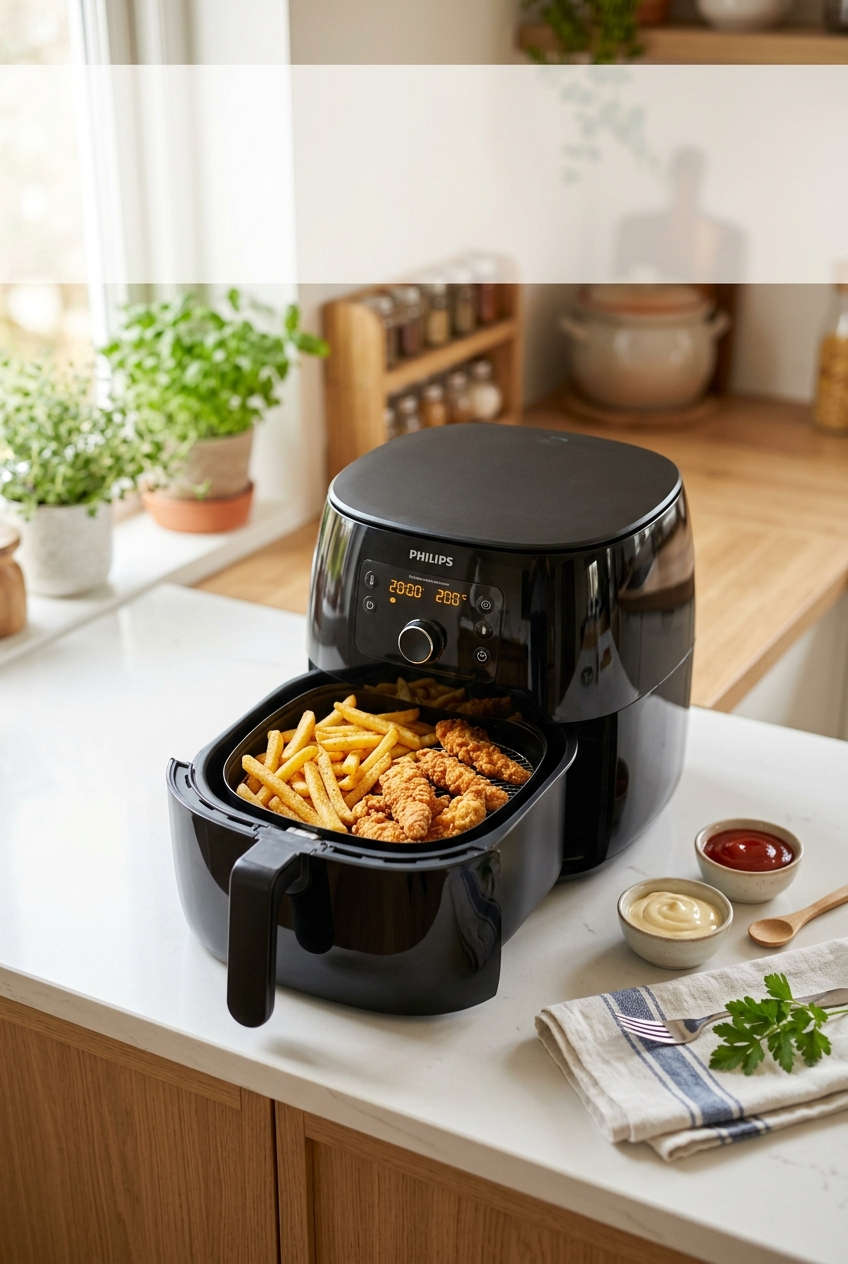
Air fryers have earned their spot on the family kitchen counter. They’re quick, they use far less oil than deep frying, and they can turn a tray of frozen nuggets into something genuinely crispy in minutes. But if your fries keep coming out limp, your chicken looks done outside while the middle is still pink, or the basket has turned into a sticky mess, the machine usually isn’t to blame. A handful of everyday habits are. The good news is that each one has a simple fix, and once you understand why it works, you’ll stop making the same mistake twice.
Cooking Technique Mistakes That Cause Soggy or Uneven Food
Most disappointing air fryer meals trace back to how the food is loaded and handled. These problems are the easiest to fix because they cost nothing and take seconds.
Overcrowding the Basket
When you’re feeding a hungry family, it’s tempting to tip the entire bag of fries into the basket and hit start. The trouble is that an air fryer is essentially a compact convection oven. It crisps food by moving hot air across every surface, and a packed basket blocks that airflow. Moisture released by the food has nowhere to go, so it steams the pieces instead of drying them out.
The fix is to spread food in a single layer with a little breathing room between pieces. If that means cooking two rounds, do it. Two batches of crisp food beat one big batch of soggy food every time, and you can keep the first batch warm in a low oven while the second one finishes.
Forgetting to Shake or Flip
Even with circulating air, the pieces on top and the pieces pressed against the basket cook at different speeds. Skip the mid-cook check and you’ll often end up with one golden side and one pale side. Pulling the basket out about halfway through to shake it, or turning larger items with tongs, exposes fresh surfaces to the heat. Smaller foods like fries, cubed sweet potatoes and broccoli benefit from a quick shake every five minutes or so, since they pack together more easily.
Skipping the Preheat
Many people drop food into a cold machine, then wonder why it takes longer and lacks that crispy crust. Recipes and package directions generally assume the air fryer is already hot, and foods that should sear on contact, like burgers or breaded chicken, suffer most when they start in a cold basket. Three to five minutes of preheating is usually enough, unless your model does it automatically.
Getting Oil Right Without Damaging Your Basket
Oil is one of the most misunderstood parts of air frying. Some families skip it entirely, while others drench everything, and both approaches cause problems.
How Much Oil Do You Actually Need?
A thin coating of fat helps food brown and develop texture, but too much simply drips off and can cause smoking. For vegetables and potatoes, tossing them in a teaspoon or two of oil in a bowl before they go in works far better than spraying at the last second, because the oil coats evenly. Choose an oil with a high smoke point, such as avocado oil or refined olive oil. Foods that already contain plenty of fat, like chicken thighs, bacon and many frozen breaded products, often need little or no added oil.
Why Aerosol Cooking Spray Can Be a Problem
Many aerosol sprays contain additives that can leave a sticky residue on nonstick coatings. Over time that film builds up, becomes difficult to scrub away and may wear down the coating. Manufacturer guidance differs between brands, so it’s worth checking your manual. A refillable oil mister is a safer everyday option, or you can brush a little oil straight onto the food rather than the basket.
Temperature, Timing and Food Safety
Getting the heat right matters for flavor, but with children at the table it also matters for safety.
Why Oven Instructions Don’t Translate Directly
Air fryers run hotter and faster than conventional ovens because the heating element sits close to the food and the fan is constantly moving air. If you follow the oven directions on a frozen food package word for word, you may end up with burnt edges and a raw center. A common starting point is to lower the temperature by about 25°F (roughly 15°C) and shorten the time, then check early. Every model behaves a little differently, so jot down what works in your machine. After a few meals you’ll have your own set of reliable settings.
Don’t Judge Doneness by Color Alone
A golden-brown exterior can be misleading. The surface of chicken, sausages or burgers can look perfect while the center hasn’t reached a safe temperature, and that’s a genuine concern when you’re cooking for kids. An instant-read thermometer takes the guesswork out. Poultry should reach 165°F (74°C), and ground meats such as burgers should hit 160°F (71°C). When a piece is particularly thick, cut into it to double-check.
Handling Wet Batter, Parchment and Light Foods
Air fryers don’t handle every food the way an oven or a deep fryer does, and a few types of food need extra care.
Wet batter is the classic example. Because the basket is perforated and the air is moving, a runny batter drips through instead of setting into a crust. Stick with a standard dry-wet-dry breading of flour, egg and crumbs, press the coating on firmly, and consider freezing battered items briefly so the coating holds its shape. Lightweight items, including leafy greens and loose seasonings, can get blown around by the fan.
The same applies to liners. If you use parchment or foil, choose products made for air fryers, make sure food weighs them down, and never preheat with loose paper in the basket. Paper that drifts against the heating element is a fire hazard.
Cleaning and Maintenance for a Longer-Lasting Air Fryer
It’s easy to let cleaning slide, especially on busy weeknights, but leftover grease and crumbs are behind many common complaints. Built-up residue burns on the next cook, which causes smoke and off flavors, and over time it can shorten the life of the appliance.
Washing the basket and tray after each use with warm soapy water and a soft sponge prevents most of this. Avoid abrasive scrubbers, which can scratch the coating and make food stick even more. Every so often, wipe the inside of the unit and the heating element, but only when it’s completely cool and unplugged. A two-minute clean after dinner saves you a long, greasy scrub later.
Keeping Kids Safe Around an Air Fryer
Air fryers stay cool compared with a stovetop flame, but the outside surfaces and the exhaust vents still get very hot. Place the unit on a stable, heat-safe surface away from the counter edge, and leave a few inches of clearance behind it so hot air can escape. Teach children to keep their hands away from the vents and the basket while it’s running, let the basket cool before anyone touches it, and be mindful of the burst of steam that comes out when you open the drawer.
Should You Replace Your Air Fryer?
If you’ve worked through these fixes and still struggle, the problem might be the appliance itself. That doesn’t automatically mean you need a new one, but a few situations make an upgrade worth considering.
A worn, flaking or heavily scratched nonstick coating is a reasonable reason to replace the basket or the whole unit, since damaged coatings can also cause food to stick badly. Uneven heating that persists even after proper preheating and shaking may point to a failing heating element or fan. Families who regularly cook for four or more people may also find a small model frustrating, because a compact basket forces repeated batches. In that case, a larger basket or a dual-drawer model can cut cooking time considerably.
On the other hand, if your machine heats evenly and the coating is intact, a new one probably won’t fix problems caused by crowding, skipped preheats or guesswork with temperatures. Before spending money, try the techniques above for a couple of weeks. You may find the air fryer you already own works better than you thought.
The Takeaway
Most air fryer frustrations come down to a few simple habits: too much food in the basket, too little attention mid-cook, and too much trust in package directions. Give your food room, shake or flip it halfway through, use just enough oil, preheat when it matters, and check the temperature of anything that needs to be cooked through. Keep the basket clean and handle liners with care, and you’ll get the crisp, juicy results this appliance is known for. Pick one or two of these changes for your next family dinner, and you’ll likely notice the difference right away.