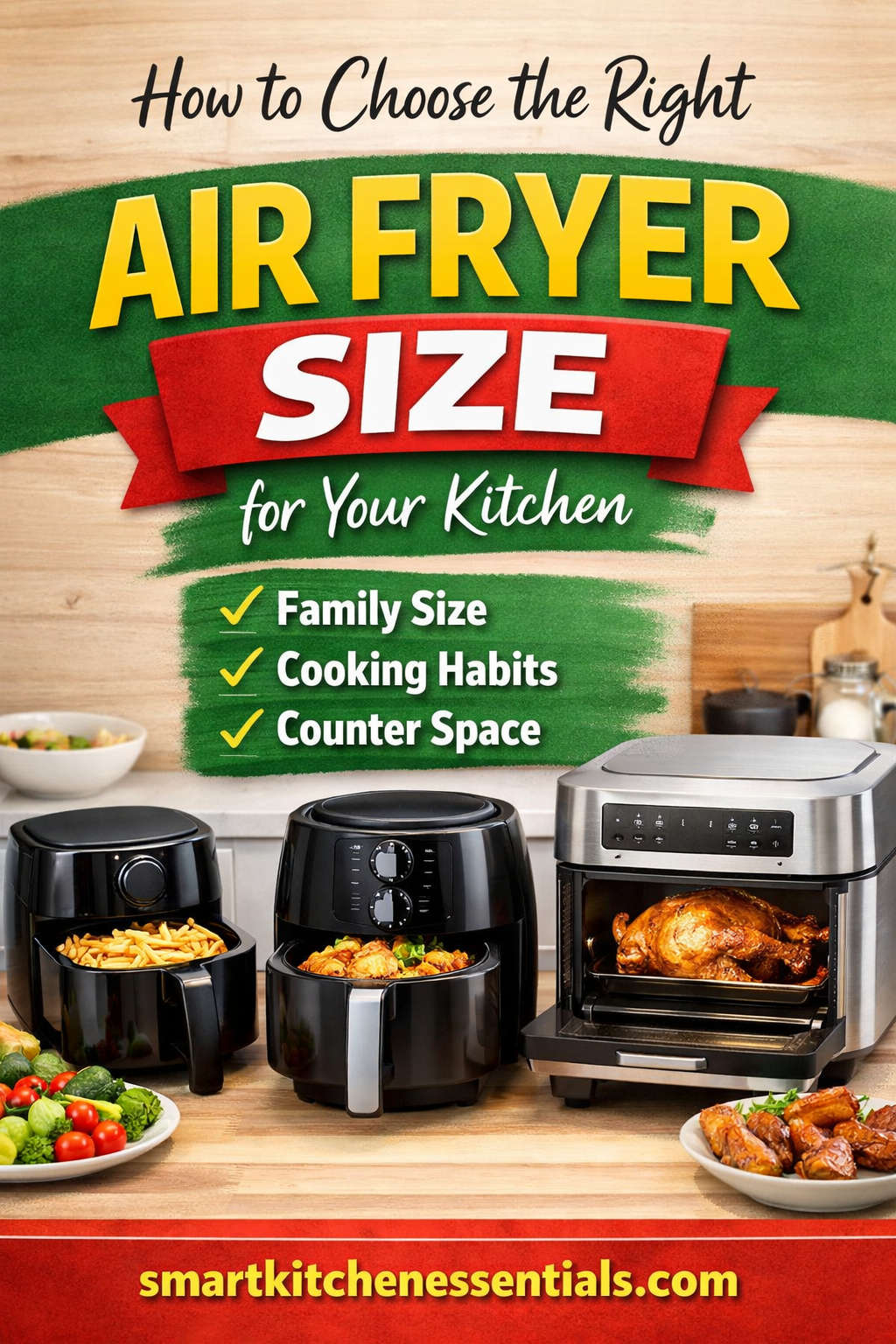
Air fryers have quickly moved from being a trendy kitchen gadget to an everyday essential in many homes. They promise healthier meals, faster cooking, and less mess, which makes them especially appealing for busy households. However, one of the most common mistakes people make when buying an air fryer is choosing the wrong size.
Air fryer size affects nearly every aspect of your cooking experience. It determines how much food you can cook at once, how evenly your meals crisp up, how much space the appliance takes in your kitchen, and even how often you’ll actually use it. A model that’s too small can feel frustrating and limiting, while one that’s too large may waste space, energy, and money.
Choosing the right air fryer size is not about buying the biggest option available. It’s about finding the size that fits your cooking habits, household needs, and kitchen layout. This guide will walk you through everything you need to know so you can make a confident and practical decision.
How Air Fryer Capacity Is Measured and What It Really Means
Air fryer size is usually measured by capacity, expressed in quarts or liters. This number refers to the volume of the cooking basket or chamber. While it’s a helpful starting point, it doesn’t always tell the full story.
In real-life cooking, you rarely fill an air fryer to its maximum capacity. For best results, food needs space for hot air to circulate. Overcrowding leads to uneven cooking and soggy textures, which defeats the purpose of air frying.
That means a “5-quart” air fryer doesn’t realistically cook 5 quarts of food well at once. Instead, think of the listed capacity as a guideline rather than an absolute limit. The usable cooking space is often slightly less than advertised.
Another important factor is the shape of the basket. A wider basket allows food to spread out in a single layer, which is ideal for crispiness. A deeper but narrower basket may technically hold more volume but force food to stack, reducing airflow.
The Different Air Fryer Size Categories Explained Simply
To make choosing easier, air fryers generally fall into a few size categories. Each one suits a different type of user and cooking style.
Very Small and Mini Air Fryers
These compact air fryers are designed for minimal use. They are best suited for people who live alone, have very limited kitchen space, or mainly want to prepare snacks.
They work well for reheating leftovers, cooking a small portion of fries, or crisping up frozen foods. However, they struggle with full meals and larger ingredients. Cooking for more than one person often requires multiple batches, which can quickly become inconvenient.
Mini air fryers are appealing because of their low price and small footprint, but they are not ideal for anyone who plans to use an air fryer as a primary cooking tool.
Small Air Fryers for Light Everyday Use
Small air fryers strike a balance between compact size and functional capacity. They are a popular choice for couples or individuals who cook simple meals.
This size can handle tasks like cooking chicken breasts, roasting vegetables, or preparing side dishes without taking over your countertop. However, if you enjoy hosting guests or cooking larger meals, you may find yourself wishing for more space.
Small air fryers are best for people who value convenience and efficiency but don’t need to cook large portions regularly.
Medium Air Fryers: The Most Versatile Option
Medium-sized air fryers are often considered the “sweet spot” for most households. They offer enough space to cook full meals for small families without becoming overly bulky.
This size allows you to prepare foods like a whole batch of fries, multiple pieces of chicken, or a mix of vegetables in one go. It’s large enough to be versatile but still manageable for everyday use.
For many people, a medium air fryer becomes a go-to appliance that replaces frequent oven use. It provides flexibility without overwhelming your kitchen or budget.
Large Air Fryers for Families and Entertaining
Large air fryers are designed for bigger households or people who cook in larger quantities. These models can handle full family meals, batch cooking, and entertaining guests.
They are particularly useful if you want to cook whole chickens, large cuts of meat, or multiple dishes at the same time. Some large models include dividers or multiple baskets, which allow you to cook different foods simultaneously.
The main trade-off is space. Large air fryers require more counter or storage room and may consume more power. They make sense if you will regularly use their full capacity.
Extra-Large and Oven-Style Air Fryers
Oven-style air fryers are the largest category and often replace several appliances at once. They typically include racks, trays, and advanced cooking modes.
These models are ideal for people who want maximum versatility. You can air fry, bake, toast, roast, and sometimes even dehydrate food. They are excellent for large families or enthusiastic home cooks.
However, they come with a higher price tag and a larger footprint. They are best suited for kitchens with ample space and users who plan to cook frequently.
Matching Air Fryer Size to Household Size
One of the simplest ways to choose the right air fryer size is to consider how many people you usually cook for.
If you live alone, a compact or small air fryer may be sufficient. It allows you to cook single servings quickly without wasting energy or space.
For couples, a small to medium air fryer usually works well. It provides enough capacity to cook shared meals while still being efficient.
Small families benefit most from medium-sized air fryers. They offer the flexibility to cook dinner in one or two batches without feeling restrictive.
Larger families or households with teenagers often need a large or extra-large air fryer. These models prevent the frustration of cooking multiple batches and help streamline meal preparation.
How Your Cooking Habits Should Influence Your Choice
Household size is important, but your cooking habits matter just as much.
If you plan to use the air fryer occasionally for snacks or frozen foods, you don’t need a large model. A smaller unit will do the job efficiently.
If you intend to cook full meals regularly, including proteins and vegetables, a medium or large air fryer is a better investment.
People who meal prep for the week benefit from larger capacities. Cooking in bulk saves time and reduces cleanup, making a larger air fryer worthwhile.
If you enjoy experimenting with recipes, baking, or trying different cooking techniques, having extra space gives you more flexibility and better results.
Kitchen Space and Practical Placement Considerations
Before choosing an air fryer size, take a close look at your kitchen.
Countertop space is often limited, and air fryers are not small appliances. Measure the area where you plan to place the unit, including height clearance for cabinets.
Ventilation is another important factor. Air fryers need space around them to release heat safely. Crowding them against walls or cabinets can reduce performance and safety.
If you plan to store the air fryer when not in use, consider its weight and portability. Larger models can be heavy and awkward to move, which may discourage frequent use.
Your kitchen layout should support your cooking habits, not fight against them.
Why Bigger Isn’t Always Better
It’s tempting to think that buying the largest air fryer available will future-proof your purchase. In reality, bigger is not always better.
Large air fryers take longer to preheat and may use more electricity for small meals. If you frequently cook for one or two people, a large unit can feel inefficient.
Oversized appliances can also dominate counter space and make your kitchen feel cluttered. If you’re constantly moving the air fryer to make room, you may end up using it less often.
The best air fryer is one that fits naturally into your daily routine.
How Food Type Affects the Ideal Air Fryer Size
The types of food you cook most often play a major role in choosing the right size.
Foods like fries, nuggets, and vegetables need space to spread out. A wider basket is more important than depth for these items.
Larger foods like whole chickens, roasts, or casseroles require height and volume. These dishes are better suited to large or oven-style air fryers.
If you frequently cook multiple components at once, such as protein and sides, having extra capacity or multiple racks becomes valuable.
Power, Performance, and Size Go Hand in Hand
Air fryer size often correlates with power output. Larger units typically have higher wattage, which affects cooking speed and energy use.
Most kitchens can handle standard air fryers without issues, but it’s still worth checking your electrical setup if you choose a large or extra-large model.
Higher wattage doesn’t always mean better results. Proper airflow and design matter just as much as raw power.
Cleaning and Maintenance Considerations
Cleaning is an often-overlooked factor when choosing air fryer size.
Smaller baskets are easier to wash and fit more easily in sinks or dishwashers. Larger baskets and trays may require more effort and space to clean.
If convenience is a priority, choose a size that you won’t dread cleaning after every use. Removable, dishwasher-safe components are especially helpful in larger models.
Common Mistakes People Make When Choosing Air Fryer Size
Many buyers underestimate how much space food needs to cook properly. Choosing a model that’s too small often leads to frustration and underwhelming results.
Another common mistake is buying too large “just in case” and then rarely using the extra capacity.
Ignoring kitchen space is also a frequent issue. An air fryer that doesn’t fit comfortably becomes more of a burden than a benefit.
Avoid these mistakes by focusing on your real needs rather than hypothetical ones.
Frequently Asked Questions About Air Fryer Size
Many people wonder if a small air fryer can handle large foods. In most cases, it cannot do so effectively.
Others ask whether larger air fryers cook faster. While they can cook more food at once, they often take slightly longer to heat up.
Some people worry about energy usage. While larger models use more power, using an appropriately sized air fryer can still be more efficient than a full oven.
Making the Final Decision With Confidence
Choosing the right air fryer size doesn’t have to be complicated. The key is to be honest about how you cook, how often you cook, and how much space you have.
A well-chosen air fryer feels like a natural extension of your kitchen. It simplifies meals, encourages healthier cooking, and saves time without adding stress.
When the size matches your lifestyle, the air fryer becomes an appliance you reach for again and again.
Final Thoughts
An air fryer is more than just a kitchen gadget—it’s a daily cooking partner. Choosing the right size ensures that it works with you, not against you.
Whether you’re cooking for yourself, your family, or a crowd, the right air fryer size can make meals easier, faster, and more enjoyable. Take the time to consider your needs carefully, and you’ll end up with an appliance that truly earns its place in your kitchen.