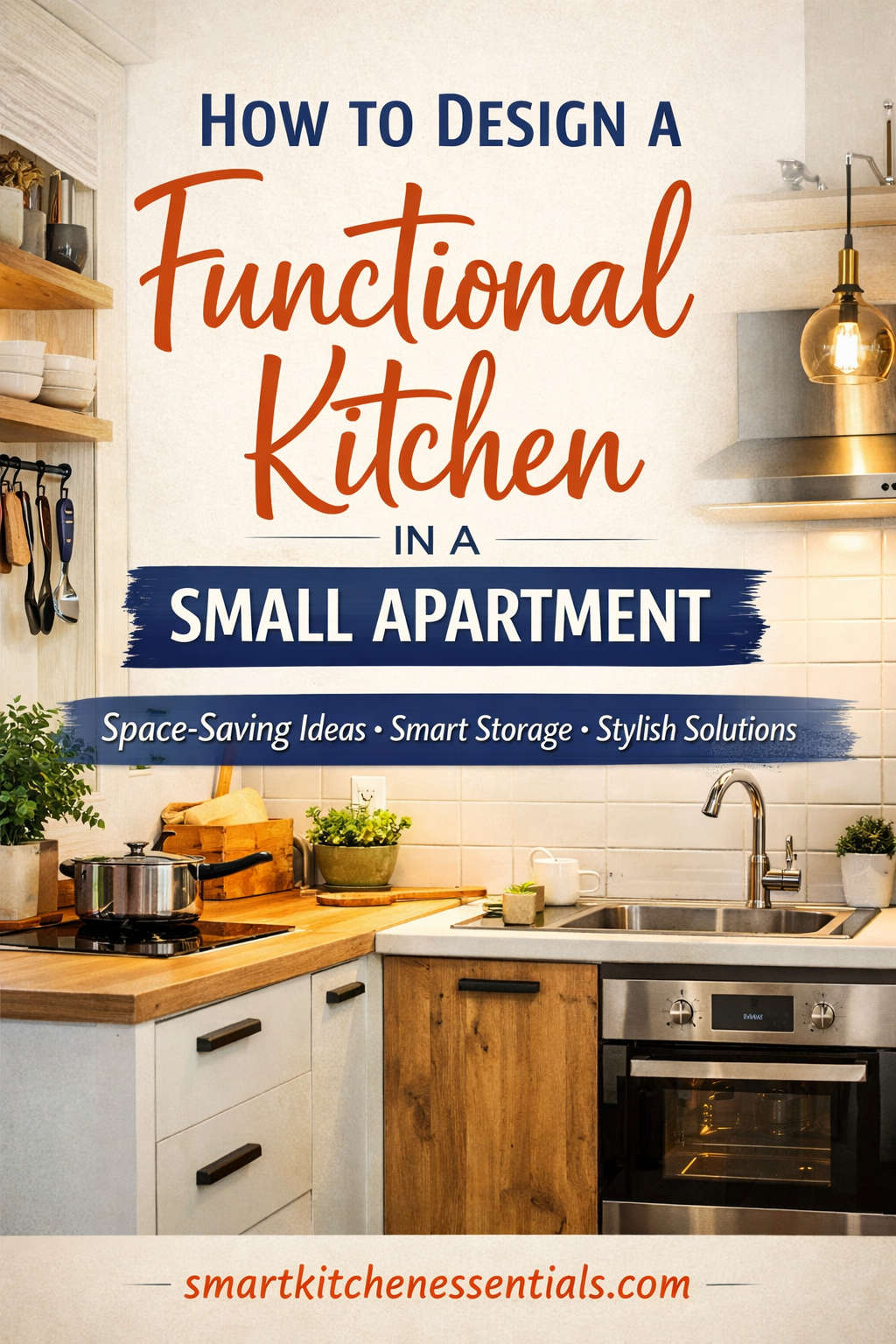
Designing a functional kitchen in a small apartment is one of the most rewarding challenges in interior design. Limited square footage forces you to think intentionally, prioritize what truly matters, and make every inch work harder. When done right, a small kitchen can feel efficient, comfortable, and even luxurious—without feeling cramped or cluttered. The key lies in smart planning, thoughtful layouts, and design choices that balance practicality with visual appeal.
This guide explores how to design a small apartment kitchen that supports your daily routine, maximizes storage, and feels welcoming rather than restrictive. Whether you cook daily or only occasionally, the principles below will help you create a kitchen that works for real life, not just for looks.
Understanding the Reality of Small Apartment Kitchens
Small kitchens come with a unique set of limitations. There is often less counter space, fewer cabinets, and minimal room for movement. In apartments, kitchens may also be part of an open-plan living area, making visual harmony even more important. Poor planning in such a compact space can quickly lead to clutter, frustration, and inefficient workflows.
Before making any design decisions, it’s important to evaluate how you actually use your kitchen. Do you cook elaborate meals or rely mostly on simple dishes? Do you need storage for bulk groceries, or do you shop frequently in small quantities? Are you the only one using the kitchen, or do you often cook with others? Answering these questions helps define priorities and prevents unnecessary features from taking up valuable space.
A functional small kitchen is not about squeezing in everything you see in large homes. It is about choosing the right things and arranging them intelligently.
Planning the Layout for Efficiency
Layout is the backbone of kitchen design, especially in small apartments. A well-planned layout improves movement, reduces wasted steps, and makes cooking more enjoyable.
A single-wall kitchen is one of the most common solutions in studio apartments and very small spaces. All appliances, cabinets, and countertops are arranged along one wall. While this layout limits counter space, it opens up the rest of the apartment and creates a clean, minimal look. To make it work, vertical storage becomes essential, and appliances must be compact and well-integrated.
Galley kitchens are highly efficient and work well in narrow apartments. With cabinets and counters on two parallel walls, everything is within easy reach. This layout supports an excellent workflow and allows for more storage and prep space than a single-wall kitchen. Proper spacing between the two sides is crucial to avoid a cramped feeling.
L-shaped kitchens are ideal when you have access to two adjacent walls. This layout opens up the space and provides flexibility for adding a small dining area or movable island. It also allows for clear separation between cooking, cleaning, and prep zones, even in a limited footprint.
In slightly larger apartments, a compact U-shaped kitchen may be possible. This layout maximizes storage and counter space but requires careful planning to maintain comfortable aisle widths. When executed correctly, it offers one of the most efficient workflows in a small kitchen.
No matter the layout, the goal is to reduce unnecessary movement and keep everything you use frequently within easy reach.
Making the Work Triangle Work in Small Spaces
The classic kitchen work triangle—connecting the sink, stove, and refrigerator—still applies in small kitchens, though it often needs to be adapted. In compact spaces, the triangle becomes tighter, but the principle remains the same: these three key elements should be positioned to support smooth, uninterrupted movement.
Avoid placing major appliances too far apart, but also avoid clustering them so closely that they interfere with each other. For example, ensure that the refrigerator door can open fully without blocking walkways or other appliances. Leave enough counter space next to the stove and sink for safe and convenient food preparation.
Even in a single-wall kitchen, you can maintain an efficient workflow by arranging appliances in a logical sequence, such as refrigerator, prep space, sink, prep space, stove. Thoughtful placement often matters more than strict adherence to design rules.
Smart Storage Solutions That Actually Work
Storage is the biggest challenge in small apartment kitchens, and also the biggest opportunity. The right storage solutions can dramatically improve both functionality and appearance.
Full-height cabinets are one of the most effective ways to maximize storage. Cabinets that extend to the ceiling eliminate wasted vertical space and reduce visual clutter by minimizing open gaps. Items used less frequently can be stored on upper shelves, while everyday essentials remain easily accessible.
Drawers are often more practical than traditional lower cabinets. Deep drawers allow you to store pots, pans, and small appliances while making everything visible and reachable. Adding internal dividers and organizers keeps drawers tidy and prevents items from shifting.
Vertical storage is essential in small kitchens. Wall-mounted rails, hooks, and magnetic strips can hold utensils, knives, and even pots, freeing up drawer and cabinet space. A narrow pull-out pantry can fit into gaps as small as a few inches and provide surprisingly generous storage for dry goods.
Corner spaces should never be wasted. Lazy Susans, swing-out shelves, and pull-out corner systems transform awkward corners into highly functional storage areas. While these solutions may cost more upfront, they significantly improve usability.
Open shelving can be useful when used selectively. It creates an open, airy feel and provides easy access to frequently used items. However, too much open shelving can quickly make a small kitchen feel cluttered. Balance open shelves with closed cabinets for a cleaner look.
Choosing Appliances That Fit Your Lifestyle and Space
In a small apartment kitchen, appliances should be chosen with intention, not habit. Standard-sized appliances may be unnecessary or even counterproductive if they dominate the space.
Compact appliances are designed specifically for small homes and often perform just as well as their larger counterparts. Slim refrigerators, two-burner cooktops, and combination microwave-ovens can meet most cooking needs while freeing up valuable space.
Integrated or panel-ready appliances blend seamlessly into cabinetry, reducing visual noise and making the kitchen feel more cohesive. This is especially important in open-plan apartments where the kitchen is always on display.
Multi-functional appliances are another smart choice. An oven with convection and microwave functions, or a washer-dryer combo in kitchens that double as utility spaces, reduces the need for multiple separate units.
Appliance placement should support your workflow. For example, placing the refrigerator near the entrance makes unloading groceries easier, while positioning the dishwasher next to the sink simplifies cleanup.
Maximizing Counter Space Without Overcrowding
Counter space is precious in small kitchens, and every surface should earn its place. Choosing durable, low-maintenance materials ensures longevity while keeping the space practical.
Quartz and engineered stone are popular choices due to their durability and clean appearance. Lighter countertop colors reflect light and make the kitchen feel more open, while subtle patterns help hide everyday wear.
Expandable counter solutions can dramatically improve functionality. Pull-out cutting boards, slide-out prep surfaces, and fold-down counters provide extra workspace when needed and disappear when not in use. Even a narrow ledge along a wall can function as a prep area or coffee station.
Avoid cluttering counters with rarely used appliances. Store small appliances in cabinets or choose models that can serve multiple purposes. Clear counters not only improve usability but also make the kitchen feel larger.
Lighting That Enhances Both Function and Mood
Lighting plays a critical role in how a small kitchen feels and functions. Poor lighting can make even a well-designed kitchen feel cramped and uncomfortable.
Task lighting is essential. Under-cabinet lights illuminate countertops, making food preparation safer and more enjoyable. LED strip lights are energy-efficient and unobtrusive, making them ideal for small spaces.
Ambient lighting provides overall illumination and sets the tone of the kitchen. Ceiling-mounted fixtures or recessed lights ensure even light distribution without taking up visual space.
Accent lighting adds depth and character. Lighting above cabinets or inside glass-front cabinets can create visual interest and enhance the sense of space.
Natural light should be maximized whenever possible. Avoid heavy window treatments, and use light-reflective surfaces to distribute daylight throughout the kitchen.
Using Color and Materials to Make the Kitchen Feel Bigger
Visual perception is a powerful tool in small kitchen design. The right colors and materials can make a compact space feel open and inviting.
Light, neutral colors are a safe and effective choice. Whites, soft grays, and warm beiges reflect light and create a sense of openness. This does not mean the kitchen must be boring; subtle contrasts and textures add depth without overwhelming the space.
Glossy or semi-gloss finishes reflect light and enhance brightness. Glossy cabinets, polished backsplashes, and reflective countertops contribute to a more spacious feel.
Using the same flooring throughout the kitchen and adjacent living areas creates visual continuity and reduces the sense of separation. This trick works especially well in open-plan apartments.
Vertical elements, such as tall cabinets or vertical tile patterns, draw the eye upward and make ceilings appear higher. This enhances the overall sense of space without altering the actual dimensions.
Flooring Choices That Balance Style and Durability
Kitchen flooring in a small apartment must be practical, durable, and visually appropriate. It should withstand moisture, spills, and frequent cleaning while complementing the overall design.
Porcelain and ceramic tiles are durable and available in a wide range of light, space-enhancing designs. Large-format tiles with minimal grout lines create a cleaner, less fragmented look.
Luxury vinyl plank flooring is another popular option. It is water-resistant, comfortable underfoot, and often more affordable. When chosen in light or neutral tones, it contributes to a cohesive and open feel.
If using wood or engineered wood, ensure it is properly sealed and suitable for kitchen use. A consistent finish throughout the apartment enhances visual flow and makes the space feel larger.
Designing for Real Life, Not Just Photos
A functional kitchen must support daily routines, not just look good in photographs. This means considering how the space will be used over time.
Ensure there is adequate ventilation, especially in small apartments where cooking odors can spread quickly. A properly sized range hood or integrated ventilation system improves air quality and comfort.
Plan storage based on your actual belongings, not idealized assumptions. Measure cookware, dishes, and appliances to ensure everything has a designated place.
Leave room for movement. Overloading the kitchen with cabinets and appliances can make it feel suffocating. Sometimes less truly is more.
Think about maintenance. Choose finishes that are easy to clean and resistant to wear. In small spaces, dirt and clutter are more noticeable, so practicality should guide material choices.
Common Mistakes to Avoid in Small Kitchen Design
One of the most common mistakes is prioritizing aesthetics over function. While design matters, a beautiful kitchen that is difficult to use will quickly become frustrating.
Another mistake is underestimating storage needs. Insufficient storage leads to cluttered countertops, which makes the kitchen feel smaller and less usable.
Poor lighting is another frequent issue. Relying on a single ceiling light often results in shadows and dark corners. Layered lighting is essential for both function and atmosphere.
Finally, overcrowding the space with unnecessary features can compromise comfort. Every element should justify its presence through function or necessity.
Final Thoughts
Designing a functional kitchen in a small apartment requires careful planning, creativity, and a deep understanding of how space works. When every design decision is intentional, even the smallest kitchen can become efficient, comfortable, and visually appealing.
By choosing the right layout, maximizing storage, selecting appropriate appliances, and using light and color strategically, you can transform a compact kitchen into a space that supports your lifestyle and enhances your home.
A small kitchen does not have to feel limiting. With thoughtful design, it can become one of the most enjoyable and functional spaces in your apartment.