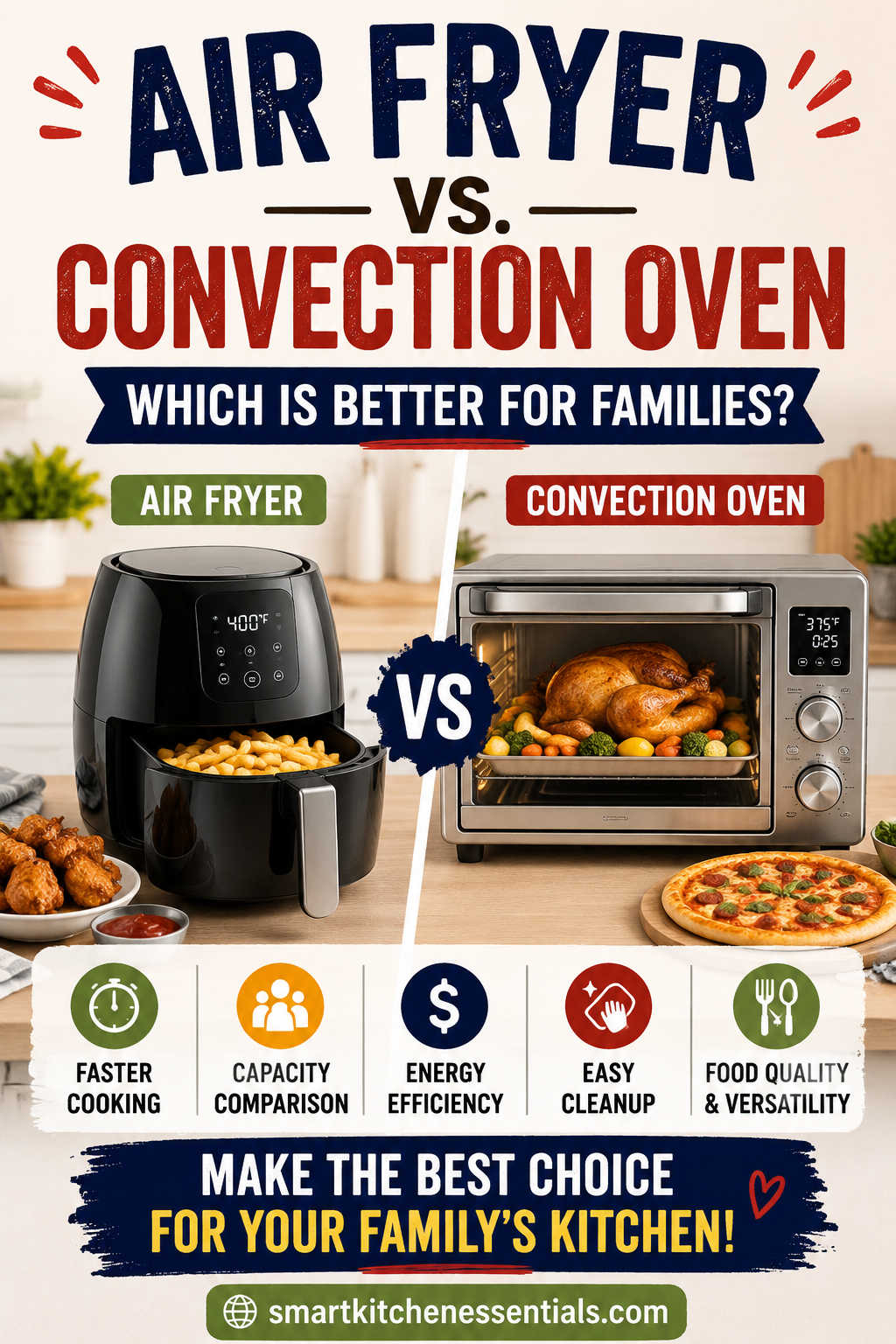
Choosing a new kitchen appliance can feel overwhelming, especially when two popular options appear to offer many of the same benefits. Air fryers and convection ovens both use circulating hot air to cook food more efficiently than a traditional oven, making them favorites for busy households. Yet despite their similarities, they serve different purposes and excel in different situations.
If you’re trying to decide which appliance is the better fit for your family, the answer depends on more than just cooking speed. Household size, meal preferences, available kitchen space, energy use, and budget all play an important role.
This guide compares air fryers and convection ovens across the factors that matter most to families. By the end, you’ll have a clear understanding of which appliance best suits your cooking style—or whether owning both makes the most sense.
Understanding the Difference Between an Air Fryer and a Convection Oven
Although they’re often compared, an air fryer and a convection oven aren’t completely different technologies. In fact, an air fryer is essentially a compact convection oven that’s been designed to maximize airflow.
Both appliances cook food by circulating hot air around it. This moving air helps create an evenly cooked interior while browning and crisping the outside. The biggest difference lies in the cooking chamber.
An air fryer has a much smaller interior and a more powerful fan relative to its size. Because hot air moves around food more intensely, meals cook quickly and develop a crisp texture that closely resembles deep-fried food without requiring much oil.
A convection oven works on the same principle but has a much larger cooking cavity. While it doesn’t circulate air quite as aggressively, it provides far more cooking space and greater versatility for preparing complete family meals.
Understanding this distinction makes it easier to choose the appliance that matches your everyday cooking needs.
Cooking Speed: Which Appliance Saves More Time?
One of the biggest reasons families buy an air fryer is convenience. The compact cooking chamber heats rapidly, often eliminating the need for lengthy preheating.
Weeknight dinners become much easier when frozen foods, vegetables, chicken breasts, or leftovers can be cooked in a fraction of the time required by a conventional oven. The concentrated airflow also reduces cooking times for many recipes by around 20 to 30 percent.
A convection oven also cooks faster than a traditional oven because its fan distributes heat evenly throughout the cavity. However, it still has a larger space to heat, meaning preheating usually takes longer than an air fryer.
For families preparing a single meal after work, those extra minutes can make a noticeable difference.
If speed is your highest priority, an air fryer generally comes out ahead.
Cooking Capacity: Why Size Matters for Families
Cooking capacity is often where the differences become most apparent.
Most household air fryers hold between 3 and 8 quarts. While larger models can comfortably prepare meals for three or four people, overcrowding the basket reduces airflow and prevents food from crisping properly. To maintain even cooking, larger families may need to cook multiple batches.
A convection oven, on the other hand, offers significantly more room. Whether you’re roasting a whole chicken, baking several trays of cookies, or cooking vegetables alongside the main dish, the larger interior allows everything to cook at the same time.
This becomes especially valuable during holidays, family gatherings, or meal-prepping sessions when preparing multiple dishes simultaneously saves both time and effort.
For households with five or more people, the added capacity of a convection oven is difficult to beat.
Food Quality and Cooking Results
Both appliances produce excellent results, but they shine in different ways.
An air fryer excels at foods that benefit from rapid air circulation. French fries become crisp, chicken wings develop beautifully browned skin, and breaded foods achieve a crunchy exterior using very little oil. The compact basket keeps hot air moving constantly around the food, helping moisture evaporate quickly.
Convection ovens deliver more balanced results across a wider variety of recipes. They’re ideal for roasting meats evenly, baking bread with consistent browning, producing flaky pastries, and cooking casseroles thoroughly without drying them out.
Rather than asking which appliance cooks better, it’s more accurate to ask what you cook most often.
If your family’s weekly menu includes crispy snacks, frozen foods, and quick dinners, an air fryer will likely impress you. If baking, roasting, and larger meals dominate your schedule, a convection oven provides greater flexibility.
Energy Efficiency and Everyday Operating Costs
Energy efficiency has become increasingly important as utility costs continue to rise.
Because air fryers heat a much smaller cooking chamber, they consume less electricity for short cooking sessions. Their faster cooking times further reduce energy use, making them particularly economical for preparing lunch, side dishes, or meals for one to four people.
A convection oven naturally requires more electricity because it heats a much larger space. However, that doesn’t necessarily mean it’s less efficient overall.
When preparing a full family dinner, cooking everything together inside one convection oven often uses less energy than running several consecutive air fryer cycles. The appliance becomes more efficient as the amount of food increases.
The most economical choice therefore depends on portion size rather than the appliance alone.
Cleaning and Maintenance
Cleaning is another area where many families appreciate the convenience of an air fryer.
Most baskets and trays feature non-stick coatings and are dishwasher safe. Since food cooks inside a relatively small container, grease splatter is minimal and cleanup usually takes only a few minutes.
Convection ovens require more maintenance simply because of their larger size. Grease, spills, and baked-on food can accumulate on racks, trays, and interior surfaces over time.
Fortunately, regular cleaning prevents stubborn buildup.
If your convection oven becomes difficult to clean, wiping away grease shortly after cooking—once the appliance has cooled—is often much easier than waiting several days. Fresh residue hasn’t fully hardened, making it easier to remove without aggressive scrubbing.
Similarly, washing an air fryer basket after each use prevents oil from baking onto the non-stick surface, helping preserve its coating and maintain cooking performance.
A few minutes of routine maintenance can significantly extend the lifespan of either appliance.
Kitchen Space and Storage Considerations
Before purchasing either appliance, it’s worth considering where it will live in your kitchen.
Air fryers occupy valuable countertop space. Larger family-sized models can be surprisingly bulky, so measuring your available workspace beforehand helps avoid disappointment.
Convection ovens built into a kitchen range don’t require additional countertop space because they’re already part of your cooking setup. Countertop convection ovens, however, can be even larger than many air fryers and require permanent storage space if used frequently.
For smaller kitchens, choosing an appliance that fits comfortably into your daily routine is just as important as comparing cooking performance.
Cost Comparison: Which Offers Better Value?
Price is often a deciding factor, particularly for growing families.
Air fryers are generally more affordable, with quality models available across a wide range of budgets. For many households, they offer an inexpensive way to cook healthier meals while reducing cooking times.
Convection ovens typically represent a larger investment, especially when purchasing a new kitchen range or built-in model. Countertop convection ovens are more affordable but still cost more than many entry-level air fryers.
However, value isn’t determined solely by purchase price.
If you regularly prepare meals for several people, a convection oven’s larger capacity and versatility may justify the additional expense over time. Conversely, households focused on quick weekday meals may find that an air fryer delivers greater value through convenience and lower operating costs.
Which Appliance Is Better for Different Family Sizes?
The ideal choice often depends on the number of people you cook for.
Small Households
Singles, couples, and small families often benefit most from an air fryer. It heats quickly, cooks efficiently, and avoids wasting energy on small portions.
Medium-Sized Families
Families of three to five people may find that either appliance works well depending on their cooking habits. An extra-large air fryer can easily handle everyday dinners, while a convection oven offers greater flexibility for baking and entertaining.
Large Families
For households with five or more people, a convection oven usually becomes the more practical solution. Cooking larger portions in one batch saves time, reduces cleanup, and avoids repeatedly running smaller appliances.
Can an Air Fryer Replace a Convection Oven?
This is one of the most common questions buyers ask.
For some households, the answer is yes.
If your meals primarily consist of vegetables, frozen foods, chicken, seafood, and smaller portions, an air fryer may become your primary cooking appliance.
However, replacing a convection oven becomes more challenging if you regularly prepare large family dinners, bake bread, roast whole poultry, or cook multiple dishes simultaneously.
Rather than viewing them as competitors, many families eventually discover they complement each other remarkably well.
An air fryer handles quick everyday cooking, while the convection oven manages larger meals and special occasions.
Should You Own Both?
For families that cook frequently, owning both appliances often provides the greatest flexibility.
The air fryer becomes the go-to choice for busy weeknights when speed matters most. Leftovers reheat beautifully, vegetables roast quickly, and frozen foods become crisp without lengthy preheating.
Meanwhile, the convection oven remains indispensable for baking, holiday meals, meal prepping, and recipes that simply require more space.
Using each appliance for the tasks it performs best can make meal preparation faster, more efficient, and considerably less stressful.
When It Makes Sense to Upgrade or Replace Your Current Appliance
Not every household needs to buy a new appliance immediately.
If your existing convection oven still performs well but you frequently find yourself preparing quick meals for a small family, adding an air fryer can complement your current setup rather than replace it.
On the other hand, if you’re relying on a small air fryer but regularly cook for larger groups, upgrading to a convection oven—or investing in a larger-capacity air fryer—may save time and improve meal quality.
Replacing an appliance is usually worth considering when limited capacity, inconsistent cooking, rising energy use, or frequent repairs begin interfering with your daily routine. Choosing an appliance that matches your current household size and cooking habits is often more valuable than simply purchasing the latest model.
Final Thoughts: Which Is Better for Families?
Choosing between an air fryer and a convection oven ultimately comes down to how your family cooks.
If you prioritize speed, convenience, easy cleanup, and energy-efficient cooking for everyday meals, an air fryer is an excellent choice. It’s particularly well suited to smaller households and busy families looking to prepare healthy, crispy meals with minimal effort.
If you frequently cook for larger groups, enjoy baking, or prepare complete family dinners, a convection oven offers the capacity and versatility needed to handle a wider variety of recipes.
For many households, the best solution isn’t choosing one over the other. An air fryer and a convection oven work exceptionally well together, allowing each appliance to handle the tasks it’s designed for.
Before making your decision, think about how many people you typically cook for, the types of meals you prepare most often, and the space available in your kitchen. Matching the appliance to your family’s real cooking habits will provide the greatest long-term value and make everyday meal preparation easier.