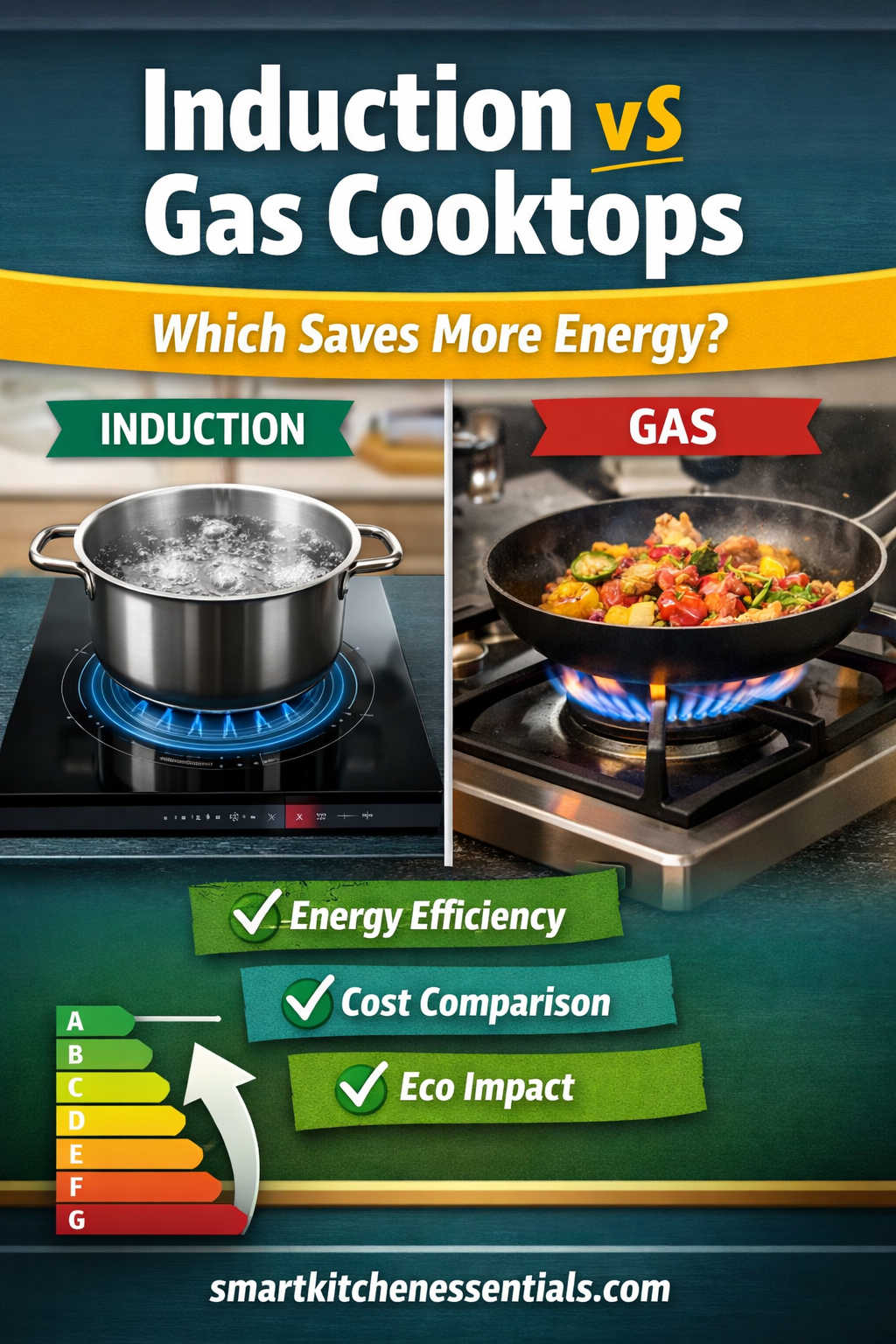
Choosing a cooktop is no longer just about cooking style or kitchen aesthetics. Today’s homeowners are increasingly concerned about energy efficiency, long-term costs, environmental impact, and safety. Among the available options, induction cooktops and gas cooktops dominate the discussion. Both have loyal supporters, strong performance reputations, and distinct advantages.
But when energy savings become the priority, the debate becomes far more technical and nuanced. This article takes a deep, practical, and reader-focused look at induction vs gas cooktops to answer one central question:
Which cooktop actually saves more energy in real-life use?
By the end of this guide, you’ll understand not only which option is more energy-efficient, but why, how, and whether it truly matters for your home and lifestyle.
Understanding How Each Cooktop Works
Before comparing energy consumption, it’s essential to understand how these two technologies generate heat. Their operating principles are fundamentally different, and that difference plays a major role in efficiency.
How Gas Cooktops Generate Heat
Gas cooktops rely on the combustion of natural gas or propane. When you turn the knob, gas flows through the burner and ignites, producing a visible flame. Heat from that flame transfers to the cookware through a combination of convection and radiation.
While this method has been used for generations and feels intuitive, it is inherently inefficient. Much of the heat produced by the flame spreads into the surrounding air rather than staying concentrated on the bottom of the pan. Even when cooking efficiently, a significant amount of energy escapes into the kitchen environment.
How Induction Cooktops Generate Heat
Induction cooktops operate using electricity, but unlike traditional electric stoves, they do not heat the surface directly. Instead, electromagnetic coils beneath the glass surface create a magnetic field. When compatible cookware is placed on the cooktop, that magnetic field induces electric currents in the base of the pan, causing it to heat instantly.
The key difference is this: the cookware itself becomes the heat source. The cooktop surface remains relatively cool, and energy is delivered directly where it’s needed.
This direct energy transfer is the foundation of induction’s superior efficiency.
Energy Efficiency Explained in Simple Terms
Energy efficiency measures how much of the energy consumed actually goes into cooking food rather than being lost as waste heat. The higher the efficiency, the less energy is required to achieve the same cooking results.
Energy Efficiency of Gas Cooktops
Gas cooktops typically operate at 40% to 55% efficiency. This means nearly half of the energy produced during combustion does not reach the food. Instead, it dissipates into the air, heats the kitchen, or escapes around the sides of the cookware.
Several factors contribute to this loss:
- Open flames spread heat unevenly
- Hot air rises away from the pan
- Heat continues to escape even after the burner is turned down
Energy Efficiency of Induction Cooktops
Induction cooktops are widely recognized as one of the most efficient cooking technologies available, with efficiency levels ranging from 80% to 90%.
Because heat is generated directly inside the cookware:
- There is minimal heat loss
- Cooking begins almost instantly
- Less energy is wasted during temperature changes
In practical terms, induction uses nearly twice as much of its energy for actual cooking compared to gas.
Why Induction Cooktops Save More Energy
The efficiency advantage of induction isn’t just theoretical—it shows up in everyday cooking.
Direct Heat Transfer
With induction, energy doesn’t have to travel from a flame to air and then to cookware. It goes straight into the pan. This eliminates most traditional heat loss pathways.
Faster Cooking Times
Induction heats cookware extremely quickly. Boiling water, for example, often takes noticeably less time on induction than on gas. Faster heating means the cooktop runs for a shorter period, reducing overall energy consumption.
Instant Temperature Control
Induction responds immediately to adjustments. When you lower the heat, energy use drops instantly. Gas burners, by contrast, continue emitting heat even after adjustments due to residual flame and metal heat retention.
No Residual Heat Waste
Gas burners and traditional electric coils remain hot after being turned off. Induction cooktops stop generating heat the moment power is reduced or cookware is removed.
Comparing Real-World Energy Consumption
Energy efficiency percentages are useful, but what matters most to homeowners is how much energy is used during daily cooking.
Cooking the Same Meal on Gas vs Induction
Consider a simple example: boiling water for pasta.
- A gas cooktop loses heat to the air around the pot
- An induction cooktop concentrates energy entirely in the cookware
As a result, induction typically uses 20–30% less total energy to complete the same task.
The same pattern appears with simmering, sautéing, and reheating food. Over weeks and months of daily cooking, these savings add up.
Energy Costs: Gas vs Electricity
Energy efficiency alone doesn’t determine your utility bill. The cost of energy sources also matters.
Gas Costs
Natural gas is often cheaper per unit than electricity in many regions. This has traditionally made gas cooktops appealing from a cost perspective, despite lower efficiency.
Electricity Costs
Electricity prices vary widely depending on location, time of use, and energy provider. While electricity may be more expensive per unit, induction’s high efficiency can offset much of that difference.
In homes with:
- Solar panels
- Renewable energy plans
- Time-of-use electricity discounts
Induction cooktops can become significantly cheaper to operate over time.
Environmental Impact and Sustainability
Energy savings aren’t just about money—they also affect environmental responsibility.
Environmental Impact of Gas Cooktops
Gas cooktops burn fossil fuels directly in the home. This produces:
- Carbon dioxide emissions
- Nitrogen oxides
- Indoor air pollutants
These emissions contribute to climate change and can negatively affect indoor air quality, especially in poorly ventilated kitchens.
Environmental Impact of Induction Cooktops
Induction cooktops produce no direct emissions. Their environmental footprint depends on how electricity is generated. As power grids increasingly rely on renewable sources like solar, wind, and hydro, induction becomes progressively cleaner.
Even in regions where electricity is partly fossil-fuel based, centralized power generation is typically more efficient and cleaner than small-scale combustion in homes.
Cooking Performance and Energy Use
Efficiency means little if cooking performance suffers. Fortunately, induction excels here as well.
Heating Speed
Induction cooktops often outperform gas in boiling, frying, and searing tasks due to rapid heat delivery.
Precision and Control
Induction allows precise temperature control, which reduces overcooking and energy waste. Maintaining a gentle simmer or melting chocolate becomes easier and more energy-efficient.
Even Heat Distribution
Because induction heats the entire base of the pan evenly, food cooks more consistently. This reduces the need to compensate with higher heat or longer cooking times.
Safety and Energy Efficiency
Safety and efficiency often go hand in hand.
Induction Safety Advantages
- Surface stays relatively cool
- Automatic shut-off when cookware is removed
- Lower risk of burns and fires
Because energy is used only when cookware is present, induction minimizes wasted energy and improves safety.
Gas Safety Concerns
- Open flames pose fire risks
- Gas leaks can occur
- Combustion produces indoor pollutants
From both an energy and safety perspective, induction offers a clear advantage.
Cookware Compatibility and Efficiency
Gas Cooktops
Gas works with virtually all cookware materials, which adds convenience but does not improve efficiency.
Induction Cooktops
Induction requires magnetic cookware such as cast iron or certain stainless steel. While this may require an initial investment, high-quality induction-compatible cookware enhances efficiency and performance.
Flat-bottomed, well-fitted pans maximize energy transfer and minimize losses.
Long-Term Cost and Maintenance Considerations
Initial Costs
Induction cooktops typically cost more upfront than gas models. However, prices have become more competitive in recent years.
Operating Costs
Thanks to higher efficiency, induction often costs less to operate over the long term, especially in energy-conscious households.
Maintenance
- Induction cooktops are easier to clean
- No burners or grates to maintain
- Fewer mechanical parts prone to failure
Reduced maintenance translates to lower lifetime costs.
Common Myths About Induction and Gas Cooking
“Gas cooks faster than induction”
In reality, induction often heats faster because energy is delivered directly to the pan.
“Induction isn’t powerful enough”
Modern induction cooktops can deliver intense heat suitable for searing and high-temperature cooking.
“Gas is always cheaper”
While gas may be cheaper per unit, induction’s efficiency often levels the playing field or even makes it cheaper over time.
Who Should Choose a Gas Cooktop?
Gas cooktops may still suit:
- Homes with very low gas prices
- Cooks who prefer visible flames
- Kitchens already equipped with gas lines
However, these advantages are increasingly outweighed by efficiency and environmental concerns.
Who Should Choose an Induction Cooktop?
Induction is ideal for:
- Energy-conscious households
- Homes focused on sustainability
- People seeking fast, precise cooking
- Modern kitchens with renewable electricity sources
For long-term energy savings, induction is the stronger choice.
Practical Tips to Maximize Energy Savings
Regardless of your cooktop type:
- Use lids to reduce heat loss
- Match pan size to burner or induction zone
- Avoid unnecessary preheating
- Turn off heat early when residual heat will finish cooking
- Keep cookware clean and flat
Small habits can produce noticeable energy savings over time.
Final Verdict: Which Cooktop Saves More Energy?
When comparing induction vs gas cooktops strictly from an energy efficiency standpoint, the conclusion is clear:
Induction cooktops save significantly more energy than gas cooktops.
They:
- Use energy more efficiently
- Cook faster
- Waste less heat
- Produce fewer emissions
- Offer better long-term sustainability
While gas cooktops still have a place in certain kitchens, induction represents the future of energy-efficient cooking.
Conclusion
The choice between induction and gas cooktops goes beyond personal preference. It’s a decision that affects energy consumption, monthly expenses, indoor air quality, and environmental impact.
As technology advances and energy systems evolve, induction cooking stands out as the smarter, cleaner, and more efficient option for modern households. For those seeking to reduce energy use without sacrificing performance, induction cooktops offer a compelling and future-proof solution.